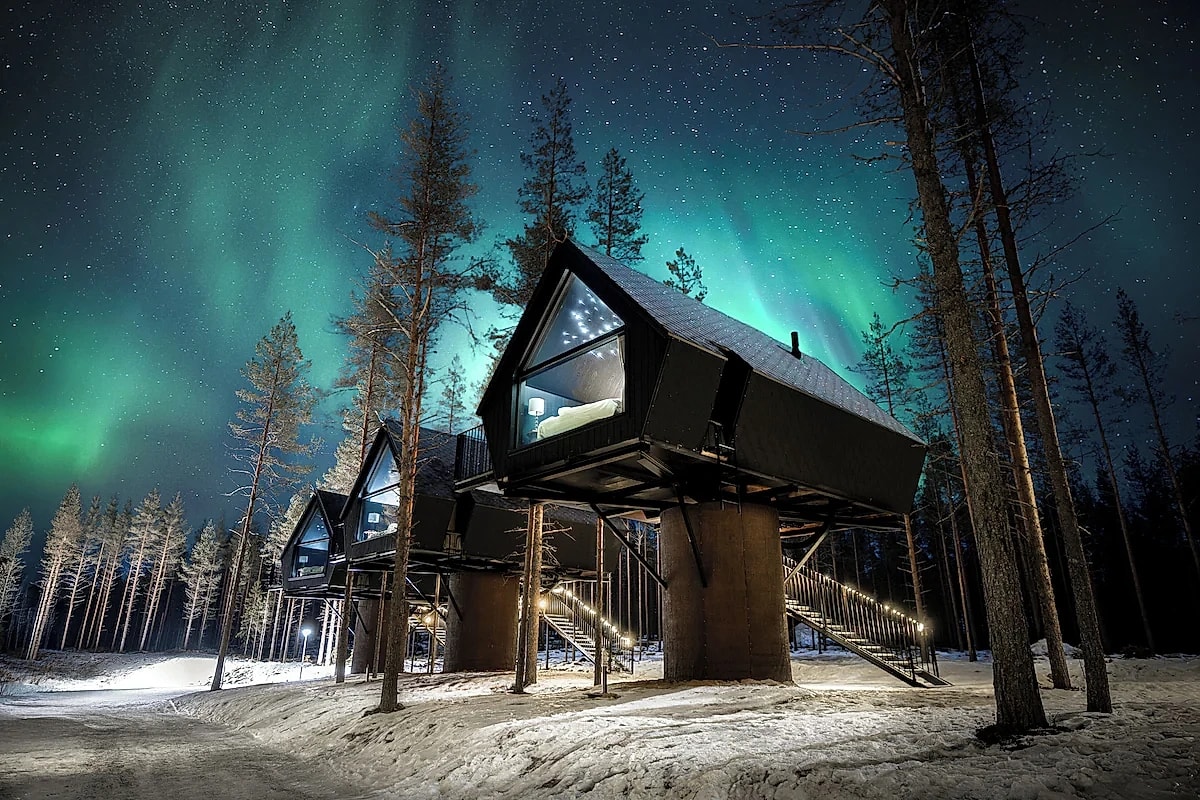
Dark skies, clear weather, and a location under the auroral oval. That's the band crossing Alaska, northern Canada, Iceland, and northern Scandinavia (Wendy Perrin).
Aurora is visible from roughly late September through March or early April. The season starts as early as late August in some places (Space.com).
Peak viewing is usually 10 p.m. to 2 a.m. (AARP).
Activity tends to rise around the March and September equinoxes. December and January have the longest nights but are much colder (Quartz).
Where to go
Northern Finland (Lapland): Nordics debrief says it has the highest odds, with sightings about 100 days a year .
Norway (Tromsø, Alta, Lofoten): Tromsø suits clients who want a city base. Alta has clear skies and a dedicated aurora observatory (Hurtigruten).
Swedish Lapland (Abisko, Kiruna): A good fit for a short trip (Space.com).
Iceland: Best as a landscape trip where the lights are a bonus, since cloud cover makes it less dependable (Quartz).
Alaska and Canada: Fairbanks and Yellowknife are the main North American options. Northern Canada is strongest from late January through March (