
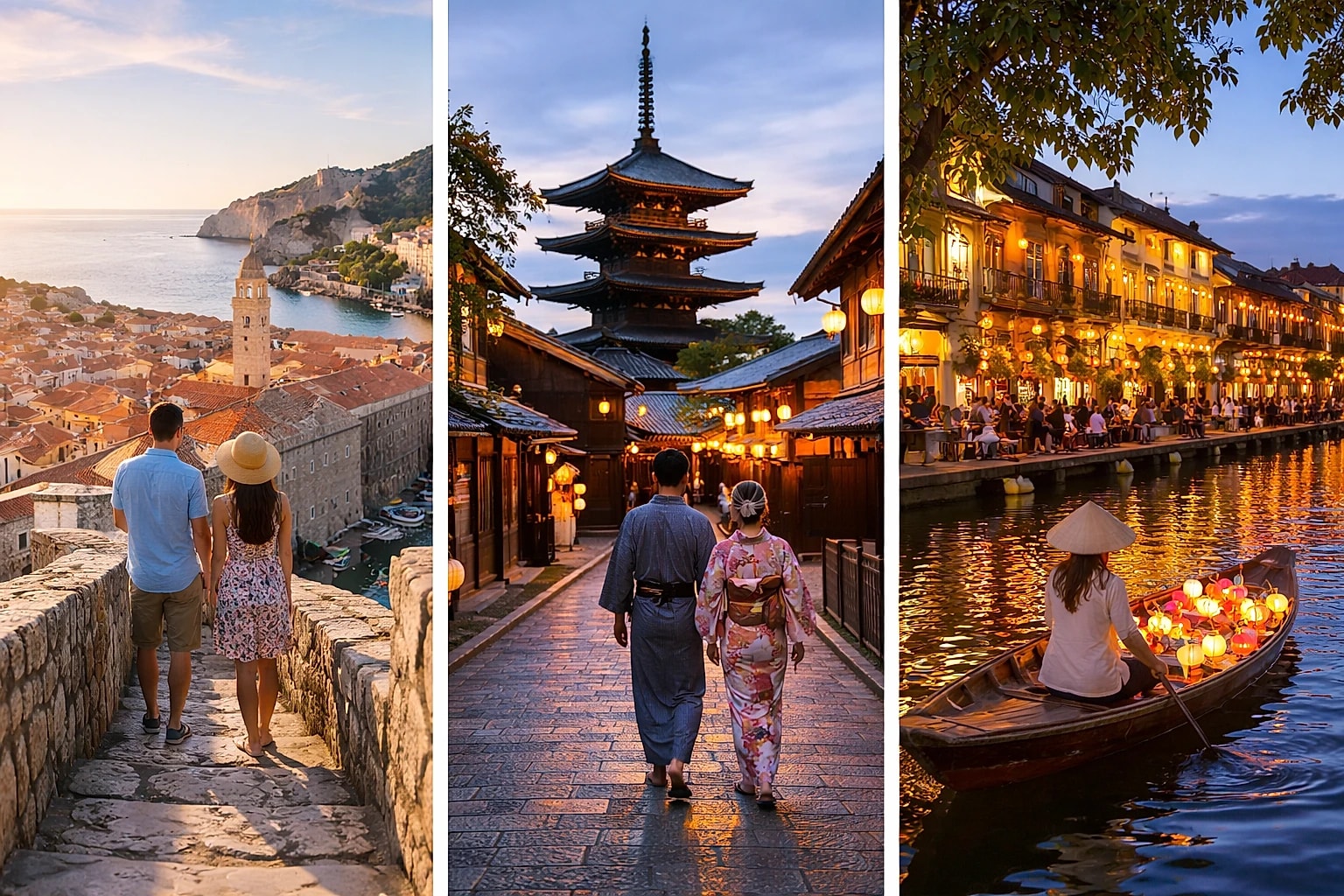
A great historic getaway does more than give you old buildings to photograph. The best ones still feel lived in: you can walk the old street plan, see layers of empire or trade, and experience culture that has survived into daily life. For a strong mix of depth, atmosphere, and visitor appeal, these are some of the standout historic escapes in Europe and Asia.
Europe
Valletta, Malta
Valletta is one of the easiest historic breaks in Europe because the whole city feels like an open-air museum. VisitMalta notes that Valletta is one of Malta’s UNESCO World Heritage sites, and Malta’s history stretches back over 7,000 years, with influences from the Phoenicians, Arabs, the Knights of St. John, and the French. That makes Valletta especially rewarding for travellers who want a compact city packed with fortifications, palaces, churches, and layered Mediterranean history.
Why it works: you can pair grand history with an easy city-break rhythm — bastion views, museums, elegant streets, and long dinners.
Don’t miss: St. John’s Co-Cathedral, the Grand Harbour viewpoints, and wandering the quieter side streets where the city’s architectural detail really stands out.
Dubrovnik, Croatia
UNESCO describes Dubrovnik as the “Pearl of the Adriatic,” noting that it became an important Mediterranean sea power from the 13th century onward and preserved its Gothic, Renaissance, and Baroque churches, monasteries, palaces, and fountains despite major damage in 1667 and again in the 1990s. That gives Dubrovnik unusual depth: it is not only beautiful, but also historically resilient.
Why it works: this is one of Europe’s most dramatic walled-city escapes, with sea views and a strong sense of historical scale.
Don’t miss: the city walls, the Franciscan Monastery area, and time outside the busiest hours to appreciate the stone streets and architectural detail. Dubrovnik’s official tourism sites also emphasize culture, attractions, and an active event calendar, so it works well as more than a photo-stop city.
Seville, Spain
Seville is ideal for travellers who want history with grandeur and energy. UNESCO says the Cathedral, Royal Alcázar, and Archivo de Indias together reflect major stages of the city’s urban history: Muslim Seville, Christian Seville, and the sixteenth-century metropolis tied to the Indies. The cathedral itself occupies the site of a former mosque, and the Giralda preserves that cultural layering in one of the city’s most recognizable landmarks.
Why it works: few cities show cultural blending as clearly or as beautifully.
Don’t miss: the Alcázar, the Cathedral and Giralda, and an evening walk through Santa Cruz, where the city’s historical texture feels strongest. Seville’s official tourism site also points to a dense mix of monuments, museums, and culture, making it a strong pick for travellers who want history plus food and city life.
Asia
Kyoto, Japan
Kyoto is one of the world’s classic historic getaways for good reason. Kyoto’s official guide notes that it was Japan’s capital for over a thousand years, from 794 to 1869, and that it has 14 UNESCO World Cultural Heritage sites within the city itself. It is also a major center of traditional crafts and practices, from kimono and ceramics to maiko culture, Noh theatre, and flower arrangement.
Why it works: Kyoto is not just preserved history — it is living tradition.
Don’t miss: a mix of major temples and quieter historic neighborhoods, plus at least one traditional cultural experience such as tea, craft, or performance. Kyoto’s official tourism content also regularly features special temple openings and ritual events, which helps the city feel historically active rather than static.
Luang Prabang, Laos
Luang Prabang is one of Southeast Asia’s most atmospheric historic towns. UNESCO and Laos tourism sources describe it as a World Heritage city recognized for its cultural, historic, and architectural value, and for its harmonious relationship between the built environment and the natural landscape. Laos tourism also highlights the city’s daily Buddhist alms-giving tradition as one of its most sacred living customs.
Why it works: it offers a gentler, more contemplative historic experience than many bigger Asian cities.
Don’t miss: early morning for the alms-giving atmosphere, temple visits, and slow walks through the old town at dusk. Current Laos tourism updates also show active efforts to protect the World Heritage zone, including new traffic controls in March 2026, which reflects how seriously the historic core is being managed.
Hoi An, Vietnam
UNESCO calls Hoi An an exceptionally well-preserved example of a Southeast Asian trading port dating from the 15th to the 19th centuries, with buildings and a street plan shaped by both indigenous and foreign influences. Vietnam’s tourism site adds that the original street grid remains intact and that 844 of the townscape’s buildings are on the UNESCO list, making the old town feel like a living museum.
Why it works: Hoi An is one of the easiest places in Asia to experience trade history, architecture, and atmosphere all at once.
Don’t miss: walking the old town slowly rather than rushing it, especially around the old merchant houses, assembly halls, and riverfront in the evening. It is best approached as a place to absorb, not just tick off.
Samarkand, Uzbekistan
Samarkand is one of the great history-heavy escapes in Asia. UNESCO describes it as a “crossroad and melting pot of the world’s cultures,” founded in the 7th century BC as ancient Afrasiab and reaching its most significant development in the Timurid period. Its major monuments include the Registan, Bibi-Khanum Mosque, Shakhi-Zinda, Gur-Emir, and Ulugh-Beg’s Observatory.
Why it works: this is the historic getaway for travellers who want Silk Road scale and monumentality.
Don’t miss: the Registan at different times of day, the Shah-i-Zinda necropolis, and at least one site connected to Samarkand’s scientific legacy, not just its architectural splendor.
Best historic getaways by travel mood
For a compact European city break, choose Valletta. Its scale makes it easy to cover a lot of history in a short trip.
For a dramatic walled-city escape, choose Dubrovnik. It delivers sea views and medieval grandeur in equal measure.
For living tradition and refinement, choose Kyoto. It is one of the strongest destinations anywhere for historic culture that still shapes everyday life.
For a slower, more spiritual historic trip, choose Luang Prabang.
For trading-port history and romance, choose Hoi An.
For Silk Road grandeur, choose Samarkand.
Final takeaway
If you want the strongest all-round historic getaway in Europe, Valletta and Seville are excellent for layered heritage in compact, walkable settings, while Dubrovnik is the most dramatic. In Asia, Kyoto is the classic choice for depth and living tradition, Hoi An is the most atmospheric trading-port escape, Luang Prabang is the calmest and most soulful, and Samarkand is the most monumental.