Introduction
Budapest is often called the Pearl of the Danube. It combines the charm of Prague with the grandeur of Vienna, and the Danube flows right through the city. For business travellers it offers a compact centre, excellent public transport, and a mix of corporate offices, conference venues, and industry meetings.
I lived in Budapest for nine years and loved not only the beauty and vibrancy of the city, but also the diversity of its outdoor spaces: a stroll along the Danube, a meander through the Castle District, a wander through the Jewish Quarter, or a hike in the Buda Hills.
Orientation: Understanding the City
Budapest was formed in 1873 when Buda and Óbuda on the west bank of the Danube joined with Pest on the east bank.
Buda is the older, residential side. Its hills rise above the river, and the Castle District sits on a ridge overlooking the water.
Pest is flat and is the commercial centre, with most offices, shops, and hotels.
Most meetings are on the Pest side, so staying there keeps you close to your appointments.
Getting In and Out
Budapest has one airport, Budapest Ferenc Liszt International Airport (BUD), about 16 km south-east of the centre.
Express bus 100E: a direct bus to Deák Ferenc tér in the city centre, with stops along the way. The ticket costs HUF 2,500 (about EUR 7) one way. It is usually the most predictable option for a centre hotel. Journey time is typically 30 to 45 minutes, depending on traffic.
miniBUD shared transfer: fixed-price minibus transfers between the airport and the city from HUF 2,499 one way (about EUR 7) per person, with no base fee. The price includes unlimited baggage, safe child seats, extra legroom, and free Wi-Fi during the journey.
Taxi or ride-hailing: the quickest door-to-door option, and the best choice for early departures, heavy luggage, or late arrivals. Pre-book a fixed-price transfer for important meetings.
Rail and metro: possible, but not a shortcut. The railway station is not at the terminal, so you will still need a bus.
Pre-booked private transfer: the most reliable choice when you need a driver to meet you in arrivals with your name on a board.
For a meeting-day arrival, allow 60 to 75 minutes from landing to your hotel, including passport control and baggage. Allow more in the rush hours, typically early morning and late afternoon.
In my experience the most efficient option is bus 100E, as it is frequent, inexpensive, and comfortable. The bus stop is on the ground floor as you exit Arrivals, between Terminal 2A and 2B.
Getting Around the City
Once in the city, the metro, trams, and buses are the best way to get around. Taxi journeys can take longer than the same route by public transport.
The backbone of the network is tram lines 4 and 6, which start in Buda, cross the river, follow the inner ring boulevard through Pest, and cross back into Buda. More than 300,000 journeys are made on these trams each day.
Tickets
Single ticket (HUF 500): one journey on one vehicle. A block of 10 costs HUF 4,500.
30-minute transfer ticket (HUF 600): one journey on two or more vehicles.
90-minute transfer ticket (HUF 850): one journey on two or more vehicles.
Tickets must be validated when you enter a metro station or board a bus or tram. Ticket inspectors are vigilant and fines are steep, so never travel without a valid ticket.
Travel passes are cost-effective for visitors:
24-hour pass: HUF 2,750
72-hour pass: HUF 5,750
The Budapest Go app is useful and available in English and Hungarian.
Budapest Card includes unlimited public transport, more than 30 free entries, and over 50 discounts. Plus and Flexi versions are also available.
CardPrice (HUF)24 hours17,99048 hours23,99072 hours29,99096 hours38,990
Where to Stay
Budapest has accommodation for every budget, from centre spa hotels to restored palaces and modern towers. The hotels below are ones I have stayed in.
Pest Centre
Anantara New York Palace: a stunning renovation of a 19th-century palace that houses the iconic New York Café. A Soviet tank collided with the building during the 1956 revolution. It was restored soon after, but lack of investment and care meant there were long years of scaffolding due to dilapidation.
Kempinski Hotel Corvinus: modern, brutalist in style, with a German hotel group's standards and excellent facilities.
Corinthia Hotel: a beautiful hotel in the style of a palace, with a full in-house spa, which is unusual in Pest.
Pest Riverside
Four Seasons Gresham Palace: a one-of-a-kind gem. Built in 1906 in the Art Nouveau style, it combines a former shopping arcade with exclusive apartments, and it is often featured in films.
Marriott: a functional 1980s hotel revamped to five-star standard. All rooms face the river, which makes it unique in Budapest.
Buda Castle District
Hilton Budapest: a 1980s hotel built behind the facade of a monastery, with a very unusual design, right in the Castle District.
Budget and mid-range (Accor group)
The Accor group operates several brands in Budapest, including Pullman, Novotel, Mercure, Ibis, and Tribe. These are good starting points for budget-conscious travellers.
Novotel Danube: great value on the Buda side; request a room with a view of Parliament directly across the river.
Mercure Nemzeti: a contemporary hotel inside a 19th-century palace in the heart of Pest.
Ibis Styles (including at the airport): some of the finest examples of this brand anywhere.
Business Culture
Formality: Hungarian business is more formal than in Western Europe until rapport is built. Informality usually follows once a relationship is established.
Punctuality: very important, especially if you are selling a product or service.
Language: many business people speak English, and German and French are also common. Older executives may not speak English and may bring an interpreter. Hungarians do not expect visitors to speak Hungarian, which is widely regarded as one of Europe's hardest languages.
Hospitality: business dinners often include local wine, beer, Unicum (a bitter herbal liqueur), and pálinka (fruit brandy). Be prepared to decline politely if you prefer not to drink. Pálinka is typically 40 to 45% alcohol, so take care.
Practicalities
Payments: electronic payment is normal, and international cards are widely accepted.
Tipping: usually 10 to 15%, and often added automatically to restaurant and bar receipts. Be aware that some staff may ask for an extra cash tip or add an amount to the card. You are not obliged to pay it.
Identification: by law you must carry ID at all times. If you are uncomfortable carrying your passport, keep a photo on your phone or a colour copy, and store the original in the hotel safe.
Safety: Budapest is a walkable city and is generally very safe. Take normal care with valuables.
Time for Yourself
Food: Hungarian cuisine is traditionally hearty and meat-based, but many classic dishes are now served in lighter versions. The city also has excellent Indian, Mexican, Argentinian, French, and German restaurants, among others.
Outdoors: Hungarians love being outside. Expect terrace dining whenever the weather allows.
Walks: as a walking city, Budapest has many spots from which to enjoy its beauty:
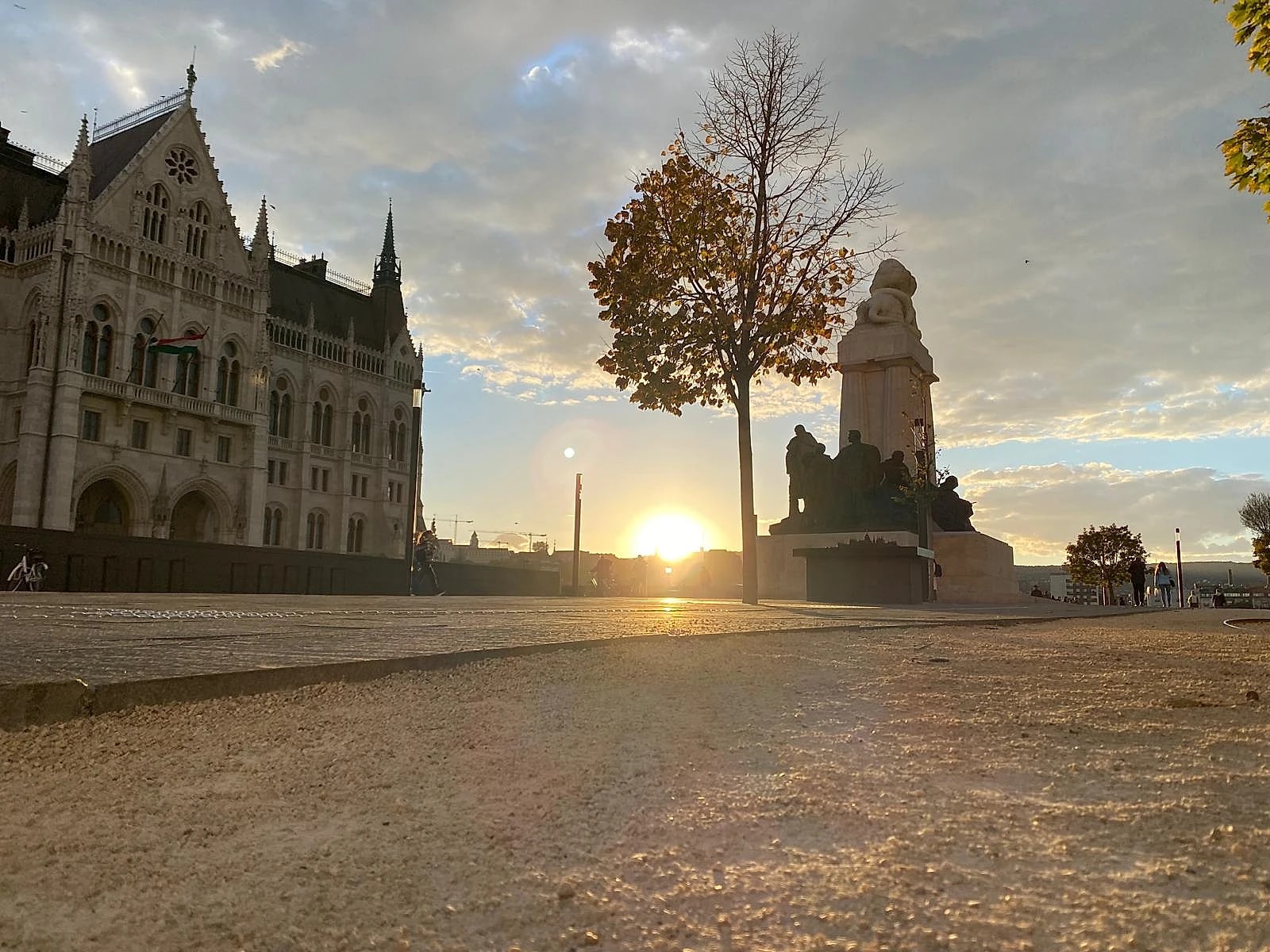
the Danube embankments, Parliament Square, and the Castle District
Hősök tere (Heroes' Square) and Városliget (City Park), recently renovated. Take the oldest underground railway in mainland Europe, the M1.
Citadella, especially romantic at sunset and also recently renovated. Take trams 47 or 49.
Normafa, a forested park high above the city with incredible views. Take bus 21.
Thermal Spas
Budapest is widely known for its thermal springs and historic spas. It is often called the Fürdőváros, or "bath city."
Abundant springs: the city sits on a major geological fault line, feeding over 120 natural thermal springs and boreholes beneath the capital.
Daily output: these springs deliver roughly 70 million litres (18+ million gallons) of naturally warm, mineral-rich water to the surface every day.
Historic bathing culture: Budapest has more than 20 operating public and medicinal thermal baths, ranging from 16th-century Ottoman-era bathhouses such as Rudas and Király to grand Neo-Baroque and Art Nouveau complexes such as Széchenyi and Gellért.
Other European regions, such as Iceland and Tuscany, also have geothermal activity. Budapest stands out for the volume of thermal water integrated into the infrastructure of a major national capital.
A visit to a spa is a highlight for any visitor. My personal favourite is Széchenyi, a complex opened in 1913 in Városliget, where locals are often found playing chess.
Climate and When to Visit
April to October: usually bright and sunny, from about 15°C to 35°C.
February, March, and November: often foggy.
January and December: can be snowy.
May and June: the wettest months.
Extending Your Trip
Hungary is very Budapest-centric, but rural Hungary has much to offer for a day trip.
Szentendre (about 20 km north)
A small town on the Danube bend with about 25,000 residents and a much quieter feel than the capital. It was settled by Serbian refugees in the 1700s, and it still has several Serbian Orthodox churches, Baroque buildings, and narrow winding streets. The main square, Fő tér, has colourful houses, cafés, and galleries. Nearby, the Margit Kovács Ceramics Museum and the Hungarian Open Air Museum show traditional rural houses and crafts. The HÉV suburban line H5 runs directly from Batthyány tér and Margit híd (Buda side).
Esztergom (about 50 km north-west, near the Slovak border)
One of the first centres of the Hungarian state. Around the year 1000, Stephen I, the first King of Hungary, made it his seat, and it later became the country's religious capital. The town is dominated by Esztergom Basilica, one of the largest churches in Hungary, whose green copper dome is visible for miles. The Castle Hill district has old royal palace ruins, the Christian Museum with its medieval religious art, and views over the river. Across the Danube is Štúrovo in Slovakia, linked by the Mária Valéria Bridge, originally built in 1895, destroyed in 1944, and rebuilt in 2001. Esztergom is about an hour by train from Nyugati pályaudvar in Budapest, making it a common day trip.
Checklist
Book your airport transfer for meeting-day arrival, allowing 60 to 75 minutes
Stay on the Pest side near your meetings, unless you have a specific reason to be in Buda
Buy a 72-hour pass or check whether the Budapest Card suits your schedule
Carry ID, or a photo or copy of it
Decide in advance how you will handle drinks at business dinners
Plan an evening walk or a terrace dinner for a relaxed end to a working day
Pack your swimming costume, as a visit to a thermal bath is recommended