
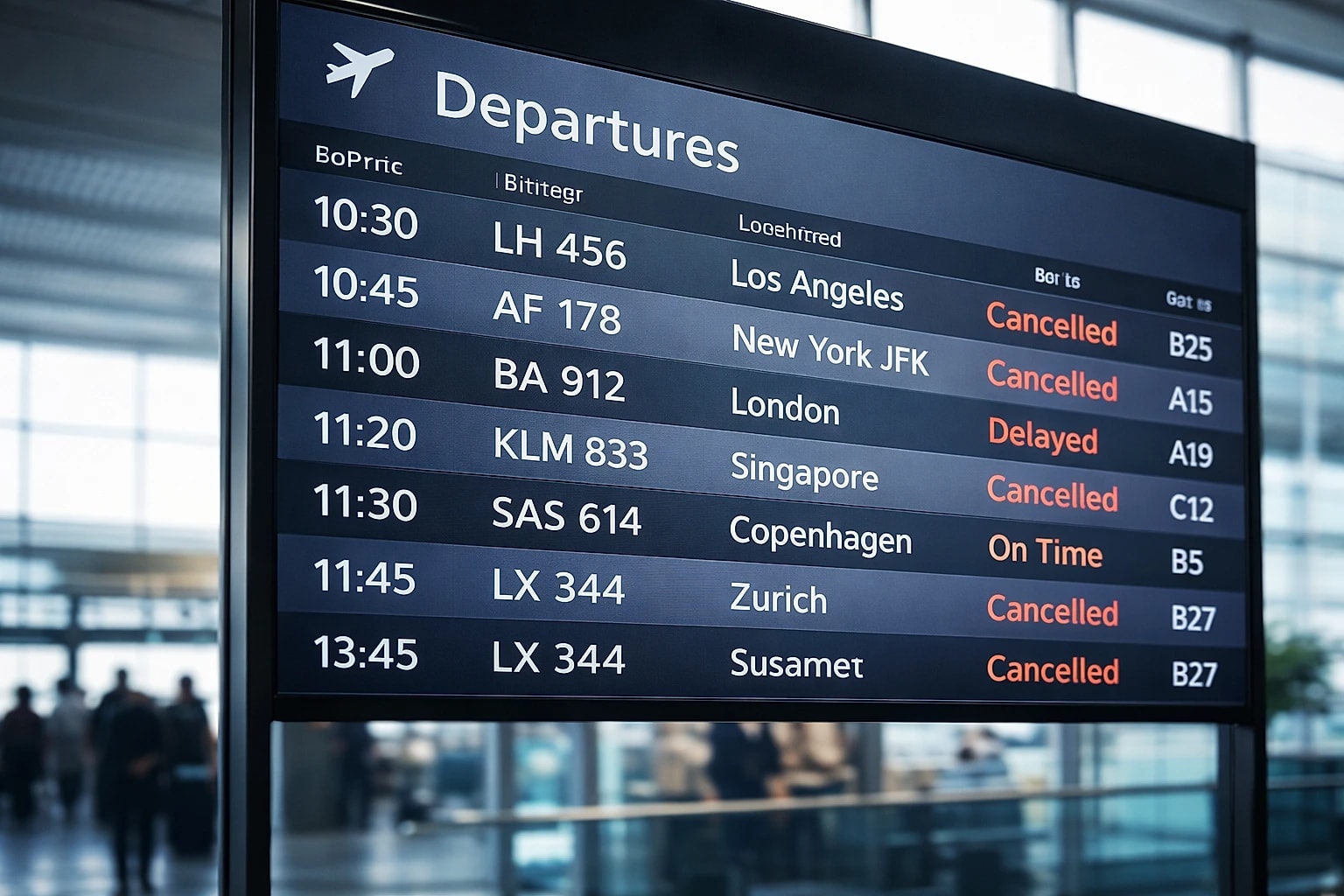
Flight cancellations are one of the most common travel disruptions — and they often lead to missed connections, unexpected delays, and unnecessary stress. The good news is that not all itineraries are created equal, and the way a trip is booked can make a major difference when things go wrong.
When flights are operated by the same airline (mostly legacy airlines), or by airlines that have agreements or belong to the same group or alliance (for ex. Lufthansa Group, Air France with KLM and TAROM, United Ailrines with British Airlines and Finnair and so on), travelers are usually protected under a single ticket. This means the airline takes responsibility for getting you to your final destination, even if the disruption happens on the first leg of the journey.
In practical terms, this often includes:
– automatic rebooking on the next available flight
– access to partner airlines within the same alliance
– coordinated support between carriers
– assistance with accommodation or meal vouchers when applicable
This is one of the main reasons why well-structured itineraries recover faster from disruptions. The system is designed to keep the journey moving, not leave the traveler to solve the problem alone.
When a missed connection happens, the best first step is to check the airline app immediately and look for rebooking options before queues build up at the airport. Airlines usually prioritize passengers already protected on a single ticket, especially when the connection is part of the same network or alliance.
A different situation appears when itineraries combine low-cost carriers or separate tickets booked independently. In these cases, each airline treats the flight as a standalone journey. If the first flight is delayed or cancelled, the second airline typically has no obligation to help, rebook, or cover additional costs.
This often means:
– buying a new ticket at last-minute prices
– covering hotel or transportation costs personally
– losing valuable time trying to reorganize the trip
For this reason, I generally do not recommend combining low-cost carriers for connecting flights. While the initial price may look attractive, the risk and potential extra costs during disruptions are significantly higher.
Smart travel planning is not only about the best fare — it’s about protection, flexibility, and recovery options when things don’t go as planned.
Because delays may be unavoidable, but chaos doesn’t have to be.