
# Roma: The Complete 7-Day Guide to the Eternal City
Rome doesn't reveal itself all at once. It takes a week of wandering — through ancient ruins, Renaissance piazzas, and unassuming trattorias — to start to feel like you know the place. Here's how to spend seven days doing it right.
## Before You Go
- Best time to visit: April–May or September–October. Summer is brutally hot and packed with tourists.
- Getting around: Rome's historic center is very walkable. The Metro (Lines A & B) covers the rest. Skip renting a car.
- Book ahead: Colosseum, Vatican Museums, and Borghese Gallery all require advance tickets — some sell out weeks in advance.
- Dress code: Covered shoulders and knees required for St. Peter's Basilica and other churches.
---
## Day 1: Ancient Rome
Start where the city began.
- Colosseum — Book a skip-the-line ticket with underground/arena floor access if you can. Arrive at opening (8:30am) to beat the heat and crowds.
- Roman Forum & Palatine Hill — Included with most Colosseum tickets. Give yourself 2-3 hours to wander the ruins where Rome was actually governed.
- Lunch: Trattoria near Monti neighborhood — try cacio e pepe or carbonara at a no-frills local spot.
- Afternoon: Explore Monti, Rome's oldest rione (district) — boutique shops, wine bars, cobblestone charm.
- Evening: Dinner in Monti, then walk to see the Colosseum lit up at night.
## Day 2: Vatican City
Give the Vatican a full day — it deserves it.
- Vatican Museums — Book an early entry slot (7:30/8am) to avoid the crush before you hit the Sistine Chapel.
- Sistine Chapel — The finale of the museum route. No photos, no talking (they mean it).
- St. Peter's Basilica — Climb the dome (extra ticket) for the best view in Rome, or take the elevator partway.
- St. Peter's Square — Bernini's colonnade is worth ten minutes of just standing still.
- Lunch: Borgo Pio neighborhood, just outside the Vatican walls.
- Evening: Castel Sant'Angelo and a stroll across Ponte Sant'Angelo at sunset.
## Day 3: Baroque Rome & the Historic Center
The postcard version of Rome.
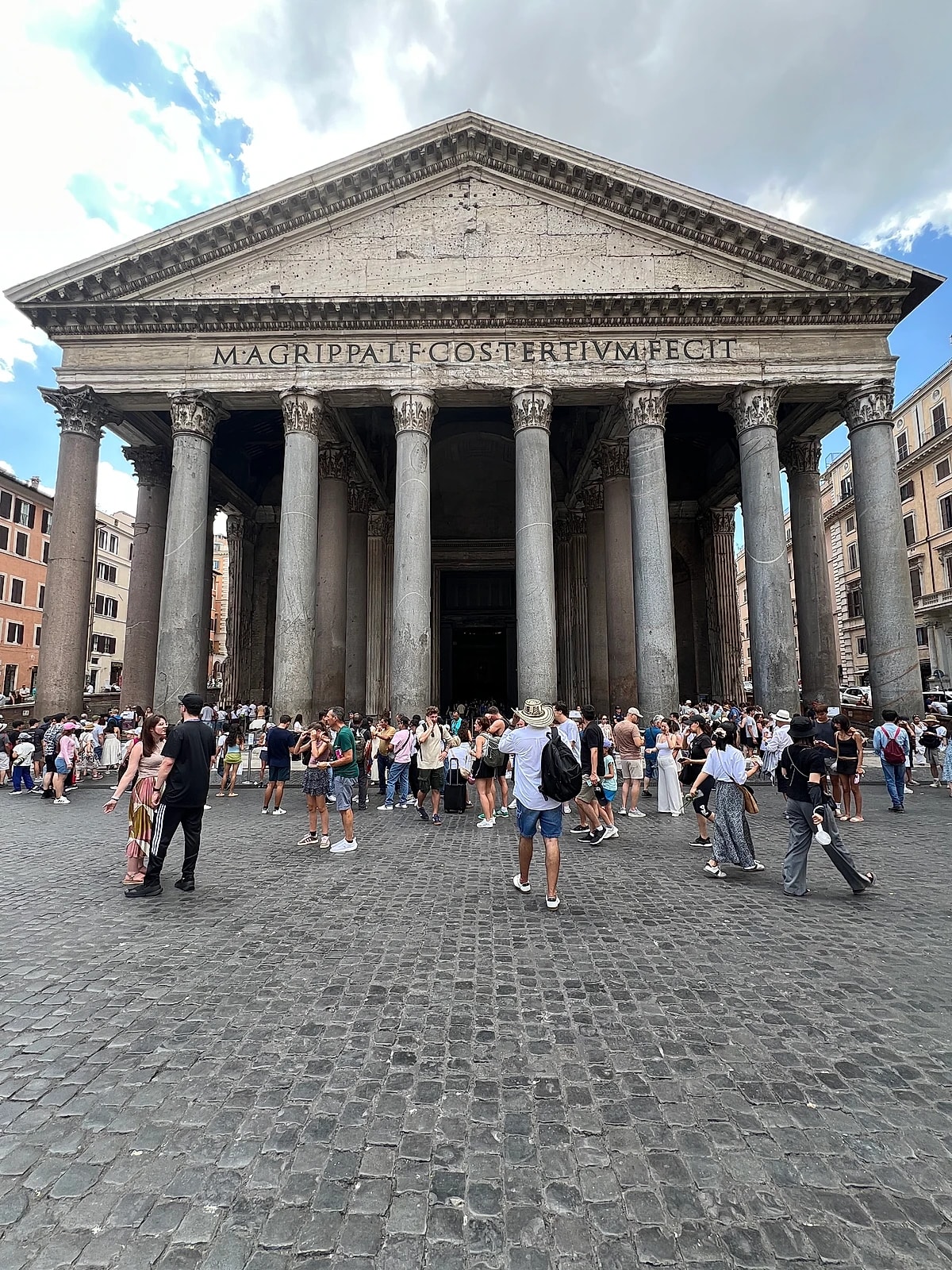
- Pantheon — Free entry. The oculus and 2,000-year-old dome still hold up.
- Piazza Navona — Bernini's Fountain of the Four Rivers, street artists, gelato.
- Trevi Fountain — Go early morning or late night to actually see it without a wall of phones. Throw a coin over your shoulder to guarantee your return.
- Spanish Steps — Climb up to Trinità dei Monti for skyline views.
- Via del Corso & Via Condotti — Shopping, from high street to high fashion.
- Dinner: Trastevere (see Day 4) or a classic in the historic center.
## Day 4: Trastevere & Testaccio
Rome's most atmospheric neighborhoods, and where locals actually eat.
- Morning: Wander Trastevere's narrow streets, visit Santa Maria in Trastevere.
- Lunch: A trattoria in Trastevere — try supplì (fried rice balls) as a starter.
- Afternoon: Cross to Testaccio, Rome's culinary heartland. Visit Mercato Testaccio for local food stalls.
- Ostiense street art — A short walk from Testaccio if you're into murals.
- Evening: Trastevere at night is the move — bars, live music, and some of the city's best dinners.
## Day 5: Borghese Gallery & Villa Borghese
A slower, greener day.
- Galleria Borghese — One of the best small museums in the world. Bernini's sculptures alone are worth the (mandatory, timed) reservation.
- Villa Borghese Gardens — Rent a bike or rowboat, or just picnic under the pines.
- Piazza del Popolo — Enter or exit the park through this grand piazza.
- **Afternoon:** Ara Pacis Museum or a leisurely walk along the Tiber.
- Evening: Aperitivo somewhere with a view — rooftop bars near Piazza di Spagna are a good bet.
## Day 6: Day Trip
Rome makes a great home base for exploring further out.
- Ostia Antica — A remarkably intact ancient Roman port city, and far less crowded than Pompeii. About 30 minutes by train.
- Tivoli — Villa d'Este (fountains and gardens) and Hadrian's Villa. About an hour by train/bus.
- Castelli Romani — Hill towns like Frascati, known for wine and views over Rome.
Pick one based on your interests — history (Ostia/Tivoli) or food and wine (Castelli Romani).
## Day 7: Hidden Rome & Farewell
Save your last day for the corners most visitors miss.
- Aventine Hill — See Rome and Vatican City framed through the famous keyhole at the Knights of Malta Priory. Also home to the Orange Garden (Giardino degli Aranci) for a quiet panoramic view.
- Circus Maximus — Walk the site of ancient Rome's chariot races.
- Jewish Ghetto — Rome's oldest Jewish quarter; try Roman-Jewish cuisine like carciofi alla giudia (fried artichokes).
- Campo de' Fiori — Morning market, then bars and energy by night.
- Final dinner: Splurge a little. Rome deserves a proper send-off meal.
---
## Practical Tips
- Food to try: Carbonara, cacio e pepe, amatriciana, supplì, pizza al taglio, maritozzi (for breakfast), gelato (skip anywhere with neon-colored displays — that's a sign it's not artisanal).
- Water: Rome has hundreds of free public drinking fountains (*nasoni*) — bring a reusable bottle.
- Tipping: Not obligatory. Rounding up or leaving a few euros is plenty.
- Pacing: Rome rewards slowness. Don't over-schedule — leave room to get pleasantly lost.
Seven days is enough to fall in love with Rome, but not enough to see it all. That's the point — it gives you a reason to come back.