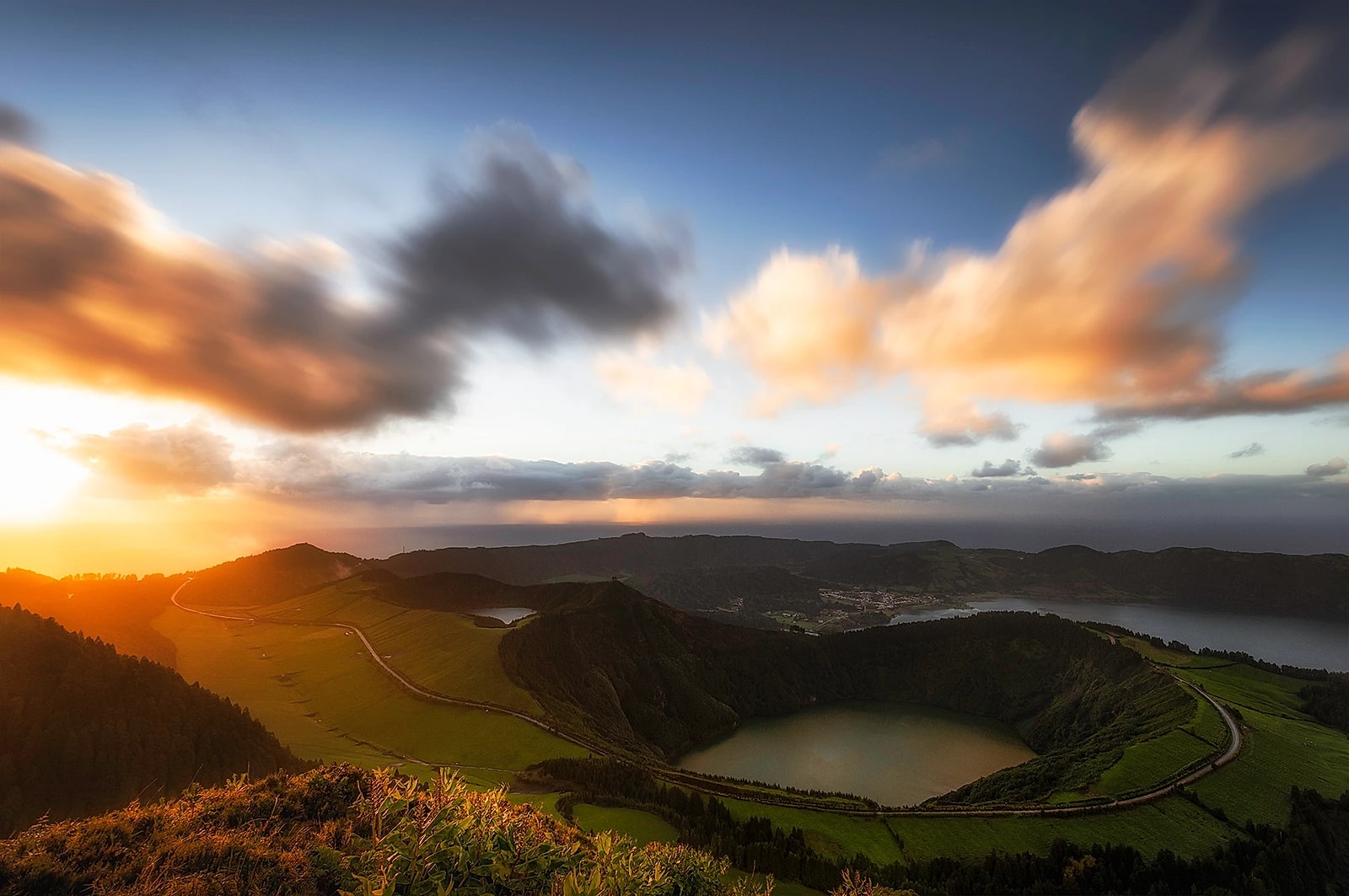
The Azores are nine volcanic islands in the middle of the Atlantic: crater lakes, hydrangea-lined roads, hot springs and whales. It's green, peaceful and perfect for nature lovers who want something completely different.
Where to stay
Ponta Delgada, São Miguel – the main town, a great base for exploring the biggest island.
Furnas – a valley of hot springs and steaming fumaroles.
Pico – a quieter island of vineyards below Portugal's highest mountain.
Out-of-the-norm Azores
Cozido das Furnas – a stew slow-cooked for hours in pots buried in volcanic ground. Watch them dig it up, then eat it for lunch.
Ponta da Ferraria – a hot spring that flows straight into the ocean. Hold the rope and float in warm seawater.
Gorreana tea plantation – Europe's oldest tea plantation, with free tastings.
Pineapple greenhouses – sweet Azorean pineapples grown under glass.
Pico's lava-field vineyards – vines grown inside black stone walls, now a UNESCO site.
Slow days
Sete Cidades – twin crater lakes, one blue and one green, with a legend of two lovers.
Terra Nostra Park – soak in a warm, iron-rich pool in a botanical garden.
Whale and dolphin watching – some of the best in Europe, with many species seen.
Lagoa do Fogo – a wild crater lake for hikers.
Eat & drink
Local cheese – especially from São Jorge.
Fresh tuna and limpets – grilled with garlic and lemon.
Bolo lêvedo – a soft, slightly sweet island bread.
Pico wine – mineral whites grown in the lava.
When to go
May to September for warm weather and blooming hydrangeas (June–July). The weather can change fast – four seasons in a day is normal.
My tips
Rent a car to explore at your own pace.
Bring a swimsuit you don't mind staining – iron-rich pools turn fabrics orange.
Leave flexible days; clouds can hide the crater views.
Want a nature escape in the Atlantic? Get in touch and I'll plan your Azores island-hop.
Cover photo: Alex Righetti / Wikimedia Commons, CC BY-SA 4.0