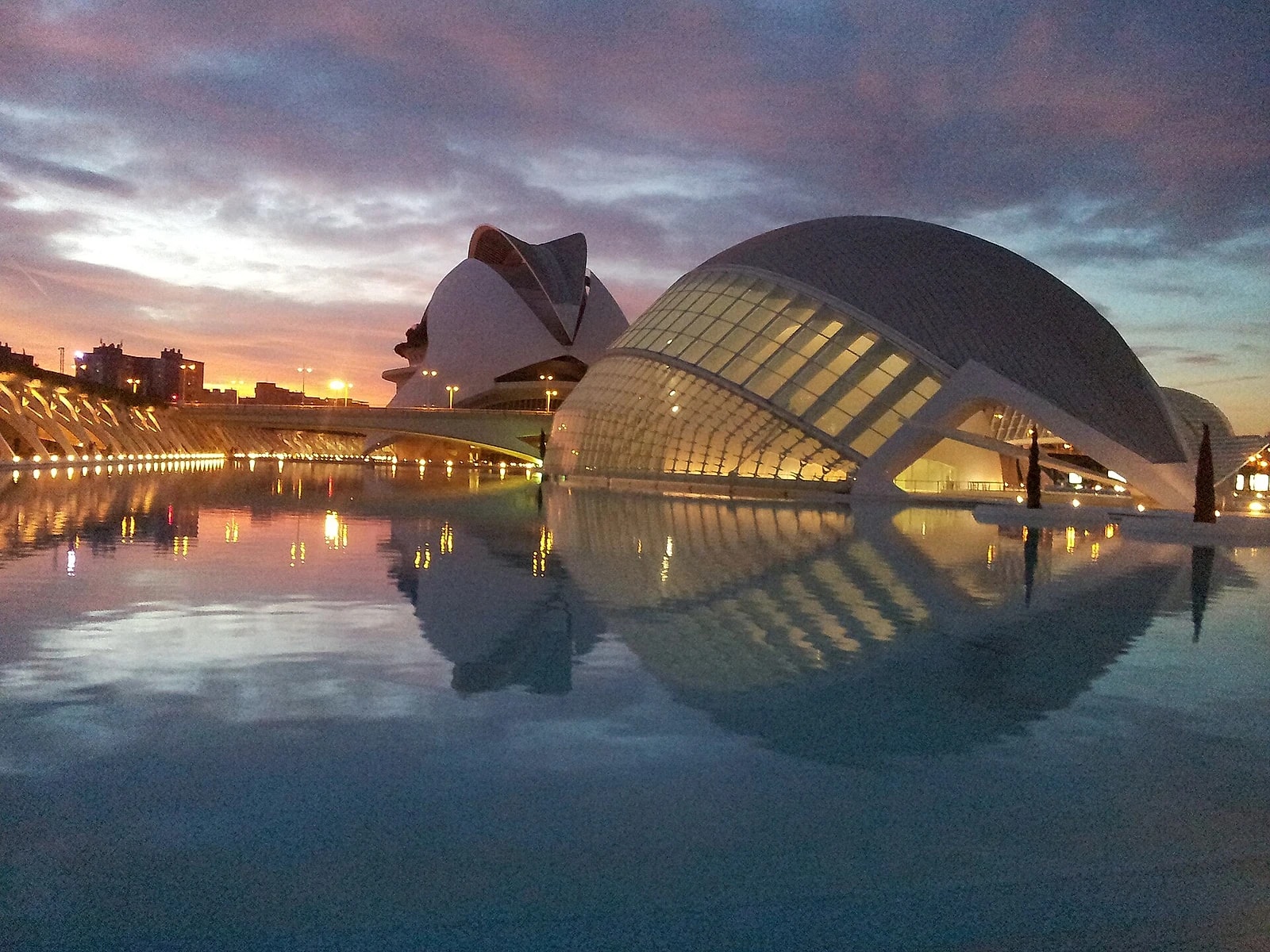
Valencia has everything: beach, culture, great food and sunshine, without the stress of a big city. It's flat, friendly and made for slow days on a bike. Here's how I'd enjoy it.
Where to stay
Ruzafa – the trendy neighbourhood for brunch spots, vintage shops and late dinners.
El Carmen – the old town, with street art, tapas bars and winding lanes.
El Cabanyal – a fishermen's quarter of colourful tiled houses, minutes from the beach.
Out-of-the-norm Valencia
Turia Gardens – a river was moved after a flood, and its dry bed became a 9km park. Cycle all the way to the futuristic City of Arts and Sciences.
The Water Tribunal – every Thursday at noon, farmers settle water disputes outside the cathedral, as they have for around a thousand years.
The Holy Grail? – Valencia Cathedral holds a chalice many believe is the real one.
Las Fallas – in March, giant satirical sculptures fill the streets and are then set on fire. Loud, wild and unforgettable.
Slow days
Albufera at sunset – take a traditional boat across the lagoon as the sky turns gold.
Malvarrosa beach – a long sandy beach with seafront restaurants, right in the city.
Mercado Central – one of Europe's most beautiful food markets. Graze, then picnic.
Eat & drink
Paella valenciana – made with chicken, rabbit and beans, and eaten at lunch. Try it in El Palmar, the village by the lagoon.
Horchata & fartons – a cold tiger-nut drink with sugary dipping pastries. Go to Alboraya for the original.
Agua de Valencia – orange juice, cava and a little extra. A cheerful local cocktail.
When to go
Spring and autumn are perfect. Come in mid-March for Las Fallas, or September for warm sea and calmer beaches.
My tips
Rent a bike – the city is flat and has great cycle lanes.
Eat on Spanish time: lunch around 2pm, dinner after 9pm.
Book Fallas accommodation early; the city fills up fast.
Fancy a sunny Spanish escape? Get in touch and I'll plan your Valencia trip, beach days included.
Cover photo: Javier Boadella / Wikimedia Commons, CC BY-SA 3.0