THE JOURNEY UNFOLDS
CHAPTER ONE
Ecuador
Where the equator splits the world in two, and the soul discovers it was always whole.
THE CAPITAL OF THE SKY
Quito
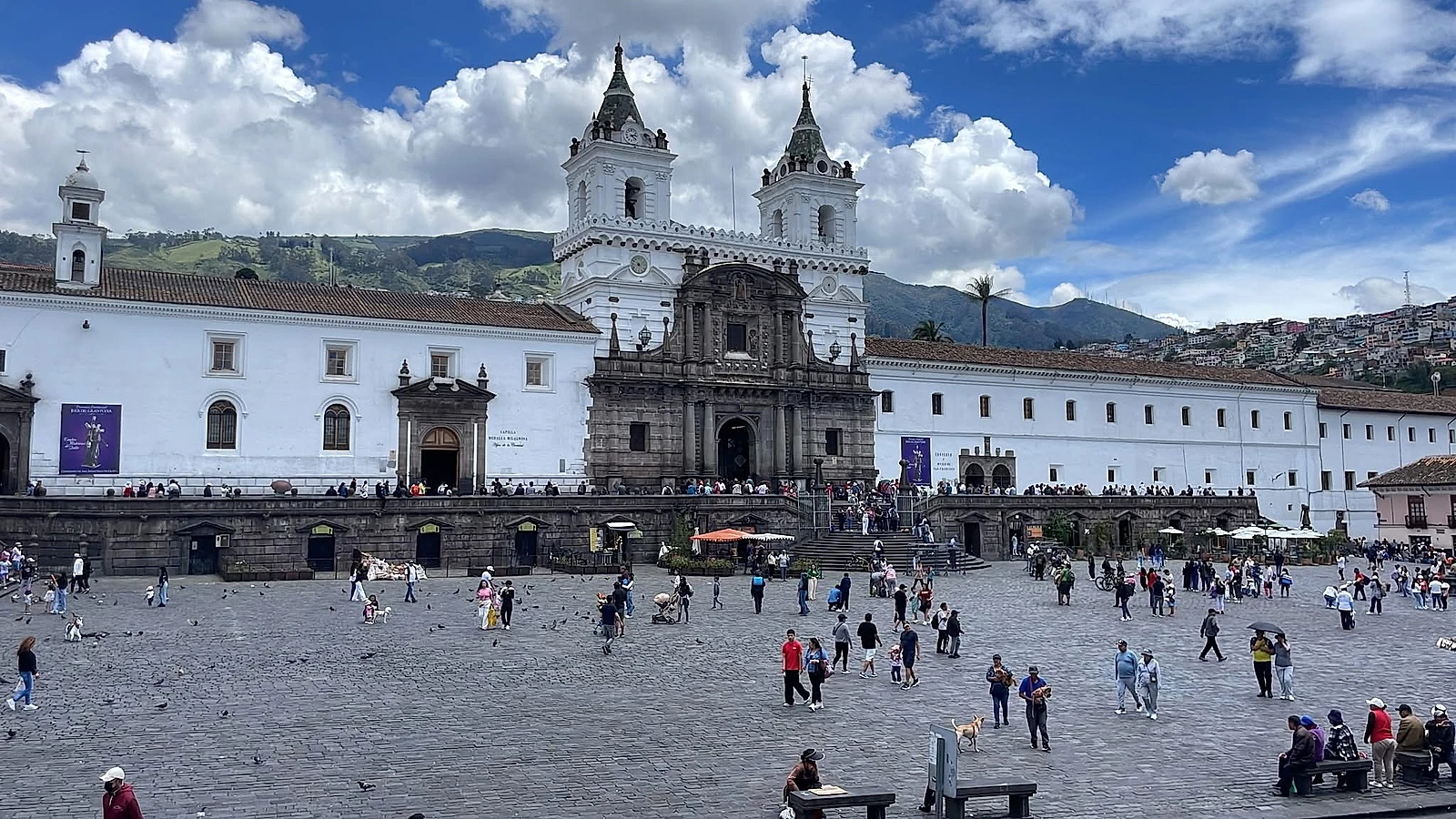
High in the folds of the Andes, at 2,850 metres above the ordinary world, Quito exists in a kind of perpetual enchantment. The air here is thin and silver-bright, as though the city was set inside a dream not yet fully formed. Colonial churches rise from cobblestone plazas like stone prayers — their gilded interiors shimmering with the devotion of centuries, where the scent of incense and old wood mingles with Andean wind slipping under the doors. The old town — a UNESCO treasure — moves at the pace of something sacred. Women in embroidered shawls carry flowers through narrow streets that tilt toward the volcano Pichincha, its snow-crown catching the afternoon light. Stand at the equator line just north of the city and feel the quiet wonder of it: one foot in each hemisphere, the earth beneath you perfectly balanced, holding you like a secret.
✦ Stay until dusk and watch the city lights flicker on below you like earthbound stars. In that moment, you will understand why the Inca called this the 'Middle of the World.'
THE ISLANDS AT THE EDGE OF TIME
The Galápagos Islands
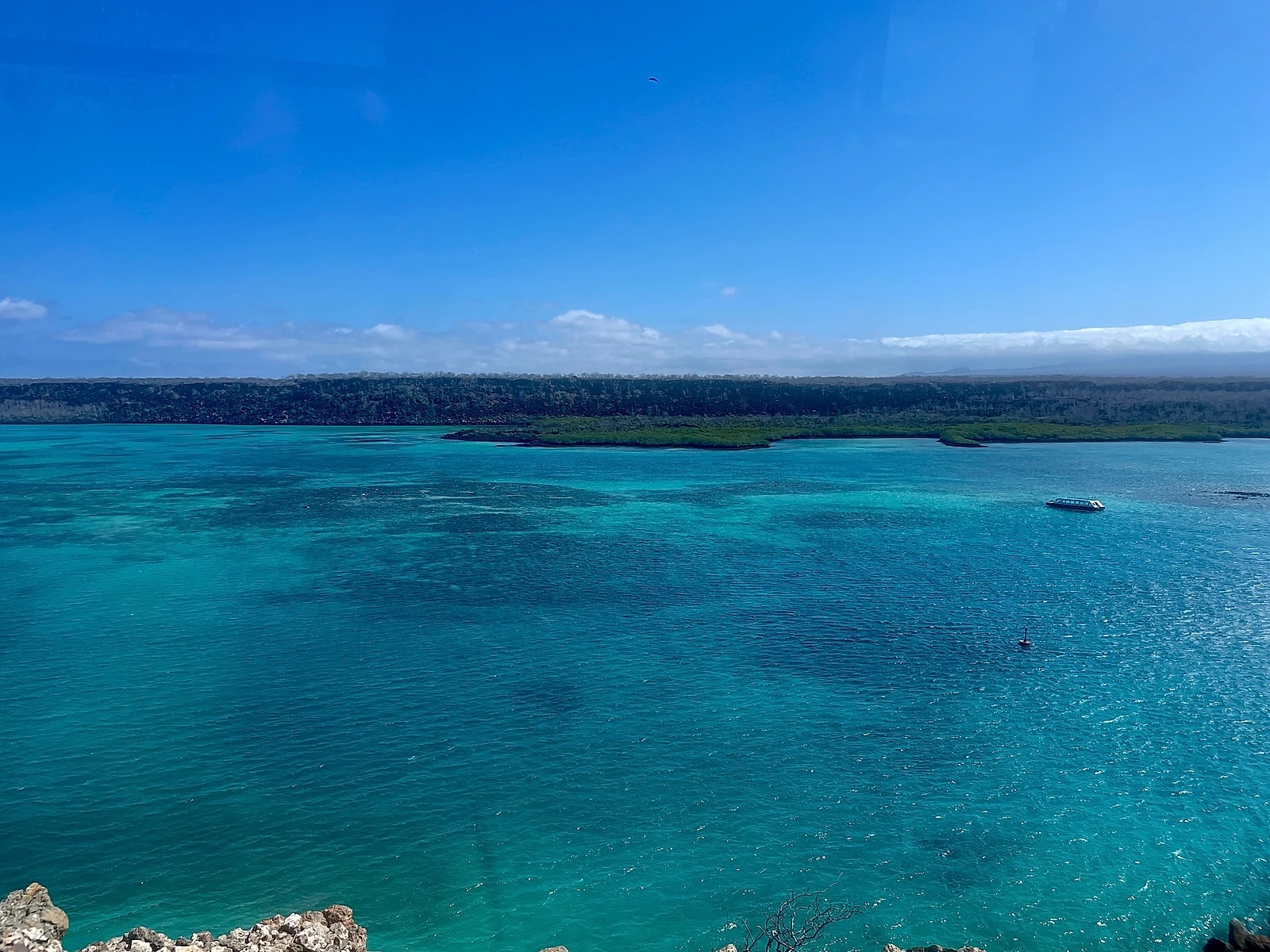
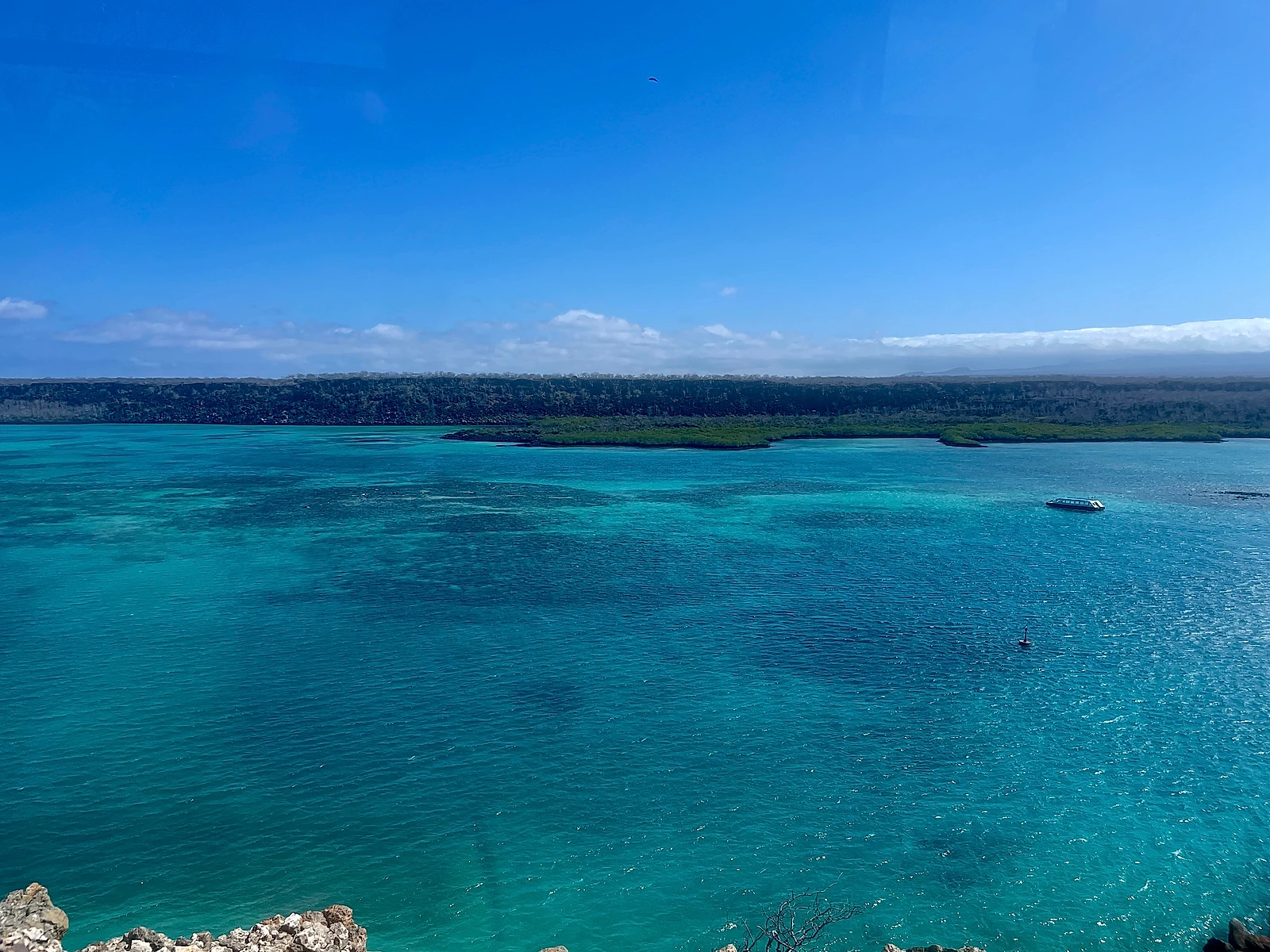
There are places on this earth that remind you that evolution is not only a scientific fact but an act of astonishing imagination. The Galápagos are such a place. These volcanic islands, scattered a thousand kilometres into the Pacific, exist outside of ordinary time. Giant tortoises— ancient beyond comprehension — move through the landscape as though they are part of it, to which of course they are. Blue-footed boobies dance their absurd, beautiful courtship dance.Marine iguanas bask like living fossils on black lava shores. Snorkelling the warm waters, you may find yourself face to face with a sea lion spinning in lazy spirals, regarding you with enormous, liquid eyes — the gaze of a creature who has never learned to fear. The ocean here is electric with life: hammerhead sharks patrol the depths, sea turtles glide overhead, and Galápagos penguins dart past like small arrows of joy. This is where Darwin glimpsed the thread connecting all living things. Floating in these waters, you feel that thread running through you too.
✦ Swim at sunset in Gardner Bay and let the silence of the open Pacific settle into your chest.
THE FOREST BETWEEN THE WORLDS
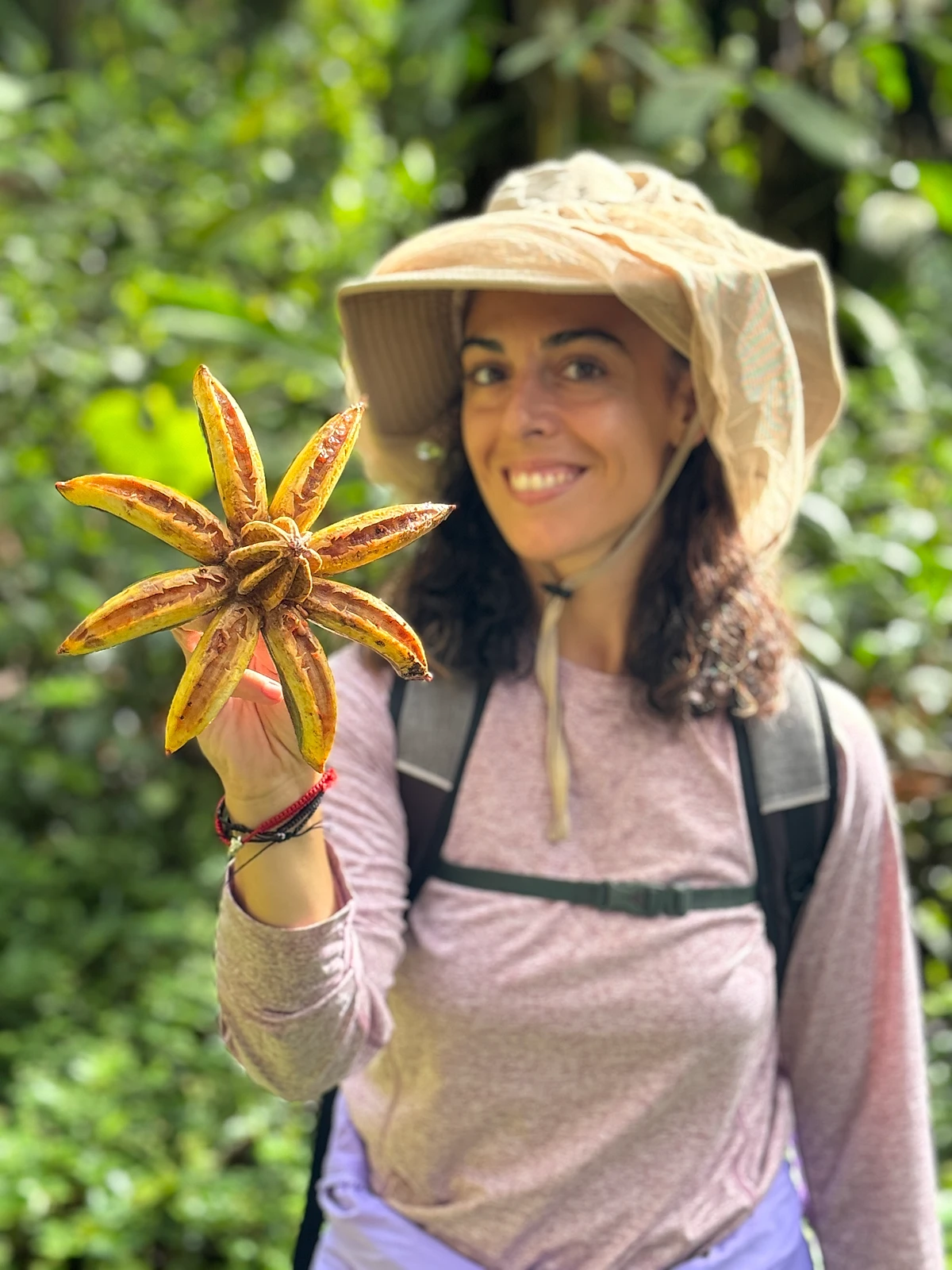
Mindo Cloud Forest
Descend from the Andes into the cloud forest of Mindo and enter a world draped in green gauze. Here the forest breathes — quite literally. Clouds drift through the canopy, and in the morning haze, the trees are veiled like brides, the light filtering through in long cathedral beams. More than 500 species of bird make this valley their home, and at dawn the forest becomes a living orchestra — the bell-like tones of tanagers, the impossible trumpeting of cock-of-the-rock, the Zip line over the valley and look down into an endless sea of green. Swim in waterfalls that emerge from solid jungle rock, the water cold and clean as prayer. Here in Mindo, you begin to understand that the forest is not a backdrop to human life but something older and wiser — a civilisation of root and rain that was ancient when our own began.
✦ Rise before dawn with a guide and listen. Before you see a single bird, the forest will have already spoken to you.
THE CITY OF MARBLE AND SILENCE
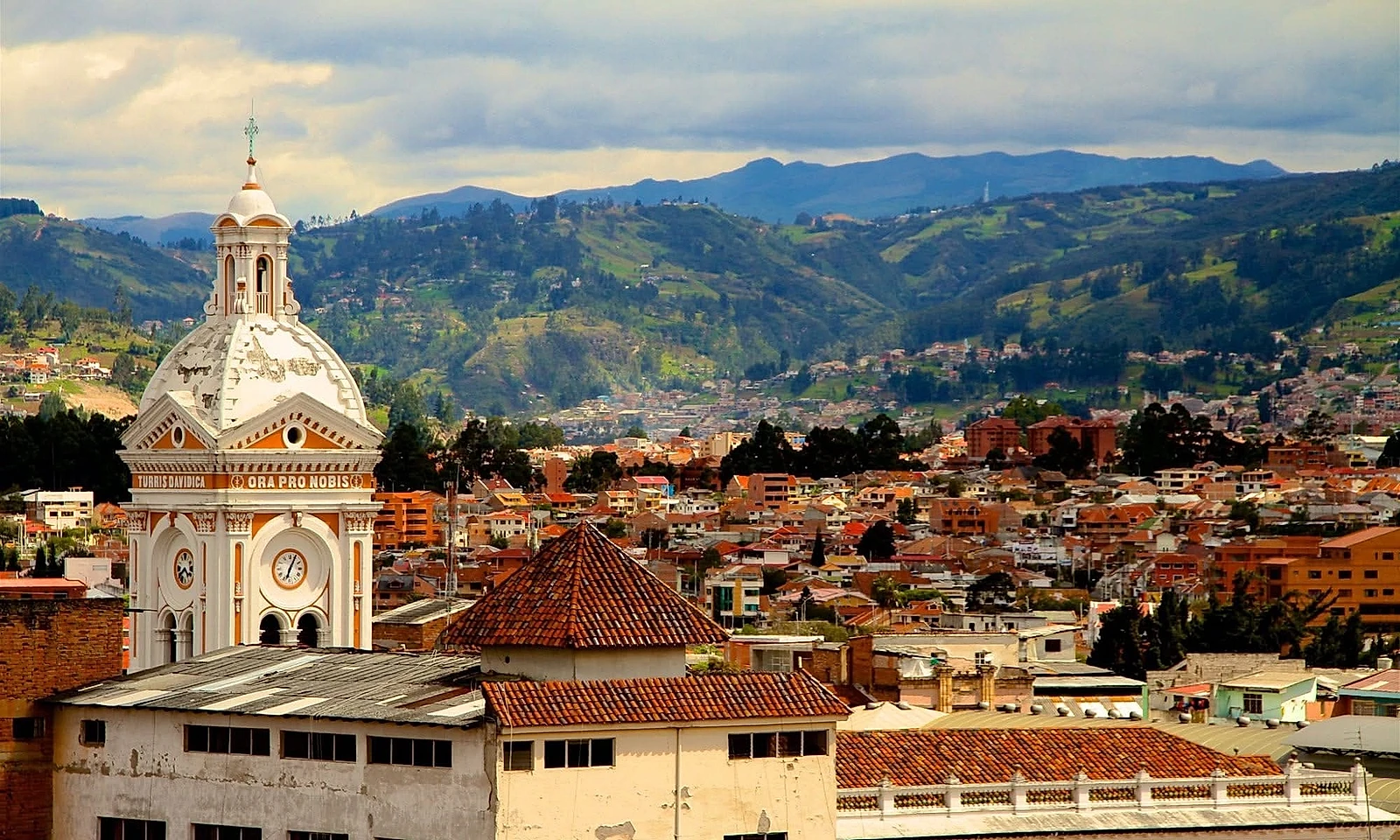
Cuenca
Cuenca arrives like a slow exhale. This colonial gem in the southern Andes wears its four rivers like a crown — the Tomebamba, the Yanuncay, the Tarqui, the Machángara — their waters running cold and green beneath flowering trees along the banks. The cathedral domes, twin cobalt-blue sentinels, rise above rooftops tiled in terracotta, visible from everywhere in the city as if reminding you that beauty is never far. Artisans still weave Panama hats by hand here — the finest in the world, though the name belongs to a story of misdirection. Sit in the flower market and watch the city move. In Cuenca, time softens. The rhythm is of another century, unhurried, made of afternoon light and the sound of church bells rolling through the hills. It is a city that teaches you the forgotten art of stillness.
✦ Walk the Tomebamba riverbank at twilight when the cathedral reflects gold on the water. This is what peace looks like when it takes physical form.
WHERE THE JUNGLE HOLDS ITS BREATH
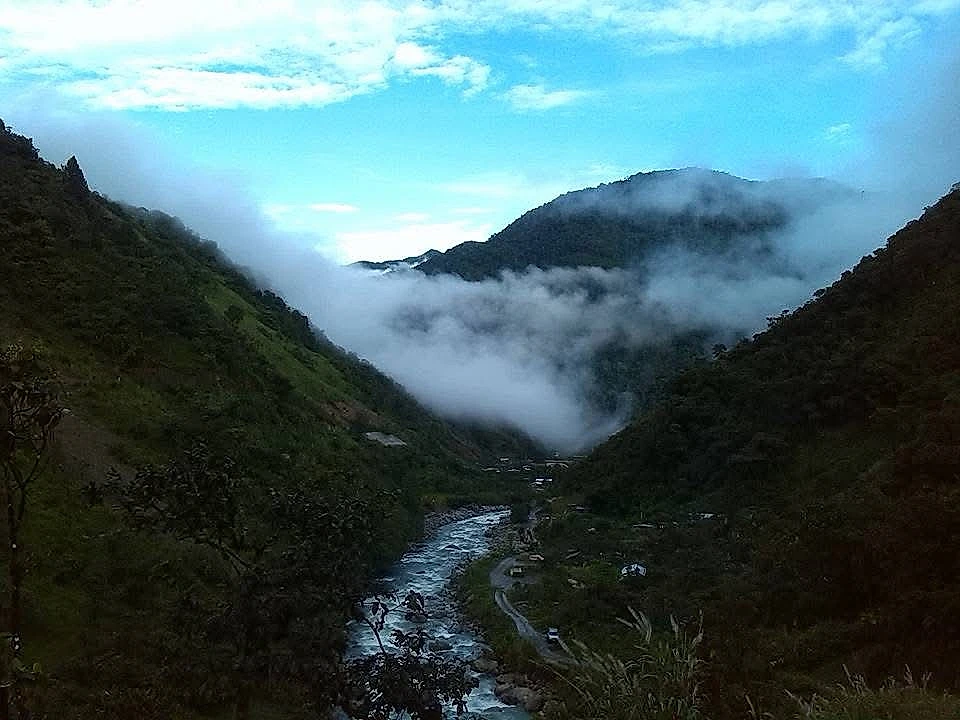
Ecuador's Amazon Jungle
East of the Andes, the mountains dissolve into a green infinity — the Ecuadorian Amazon, known here as the Oriente. Enter by dugout canoe along rivers the colour of milky tea, and feel the jungle close around you like a living embrace. This is the richest terrestrial ecosystem on earth, and it announces itself in layers: the insect hum below, the bird chorus above, the distant booming of howler monkeys that seems to come from the forest's very lungs. Indigenous Kichwa guides read the jungle like a language — this bark heals fever, those leaves form a roof in rain, that spider's web predicts tomorrow's weather. They move through the undergrowth with a silence that speaks of belonging. Nights here are absolute and alive — a darkness thick with the calls of frogs, the rasp of insects, the occasional rustle of something large and unhurried. Sleep in an open lodge and let the sounds of the jungle replace every thought. By morning, you will have dreamed in green.
✦ Ask your guide to take you out before sunrise onto the river. When the mist rises from the water as the jungle wakes, you will understand what the word 'sacred' was invented for.
✦
"You do not travel South America. South America travels through you — rearranging everything, leaving you larger than you arrived."
CHAPTER TWO
Chile
A country that is a poem — a thin verse stretched between the Andes and the sea, from desert to ice.
THE CITY BETWEEN MOUNTAINS AND SEA
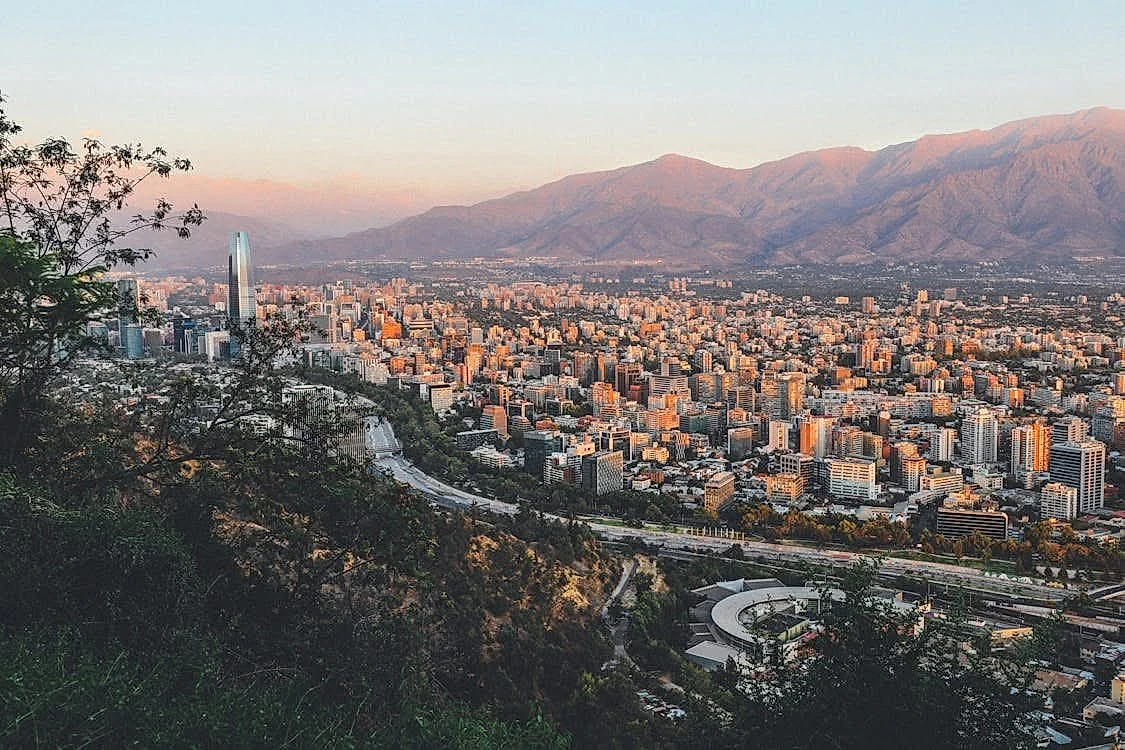
Santiago
Santiago is a city that earns its beauty slowly. On clear days — and after rain — the Andes appear behind the skyline in white-crowned magnificence, so close and so vast that the city seems to exist in their shadow in the most exhilarating possible way. The Barrio Italia , wine bars, and tile-fronted restaurants where the smell of slow-cooked stew and Chile's extraordinary carménère fills the street. The Central Market bursts with the sea's abundance — congrio, centolla, locos — piled high in a cathedral of ironwork and ocean. Climb Cerro San Cristóbal and the city opens beneath you: a vast human map bordered on every side by the improbable. The Andes to the east, the Pacific light to the west, and the vineyards of the Maipo Valley just a breath south, producing wines of such depth and dark fruit that a single glass tastes like the whole long growing season pressed into it.
✦ Time your visit for a clear winter day when the Andes are freshly white. The city and the mountains together make one of the great views on earth.
THE PAINTED CITY
Valparaíso
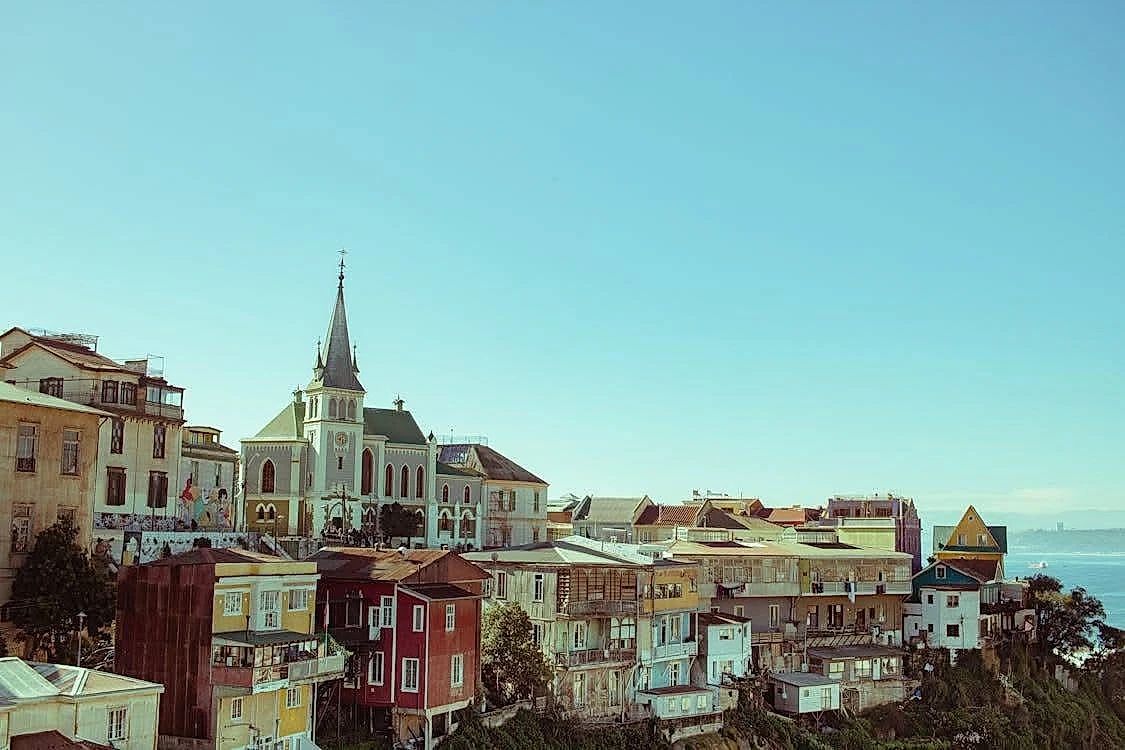
Forty-two cerros, or hills, cascade toward the Pacific, each street a new angle, each corner a mural — the city's walls covered in paintings of such wild invention that wandering its steps feels like moving through a living gallery. The old funiculars, or ascensores, creak and sway as they carry you between the flat port below and the vertiginous neighbourhoods above, where colourful houses cling to impossible slopes like bright birds roosting on a cliff. Pablo Neruda called it his 'beloved city' and built one of his fantastical houses here — La Sebastiana — a ship-like structure where every room is a view and every view a poem. The poets, the sailors, the artists, the fishermen — all of Valparaíso's souls have left their mark in colour and saltwater. At night, the Pacific stretches silver and endless, and the city's lights curve around the bay like a necklace of embers.
✦ Get deliberately lost in the cerros. The mural you stumble on by accident, down an alley you weren't meant to find, will be the most beautiful one.
THE NAVEL OF THE WORLD
Easter Island — Rapa Nui
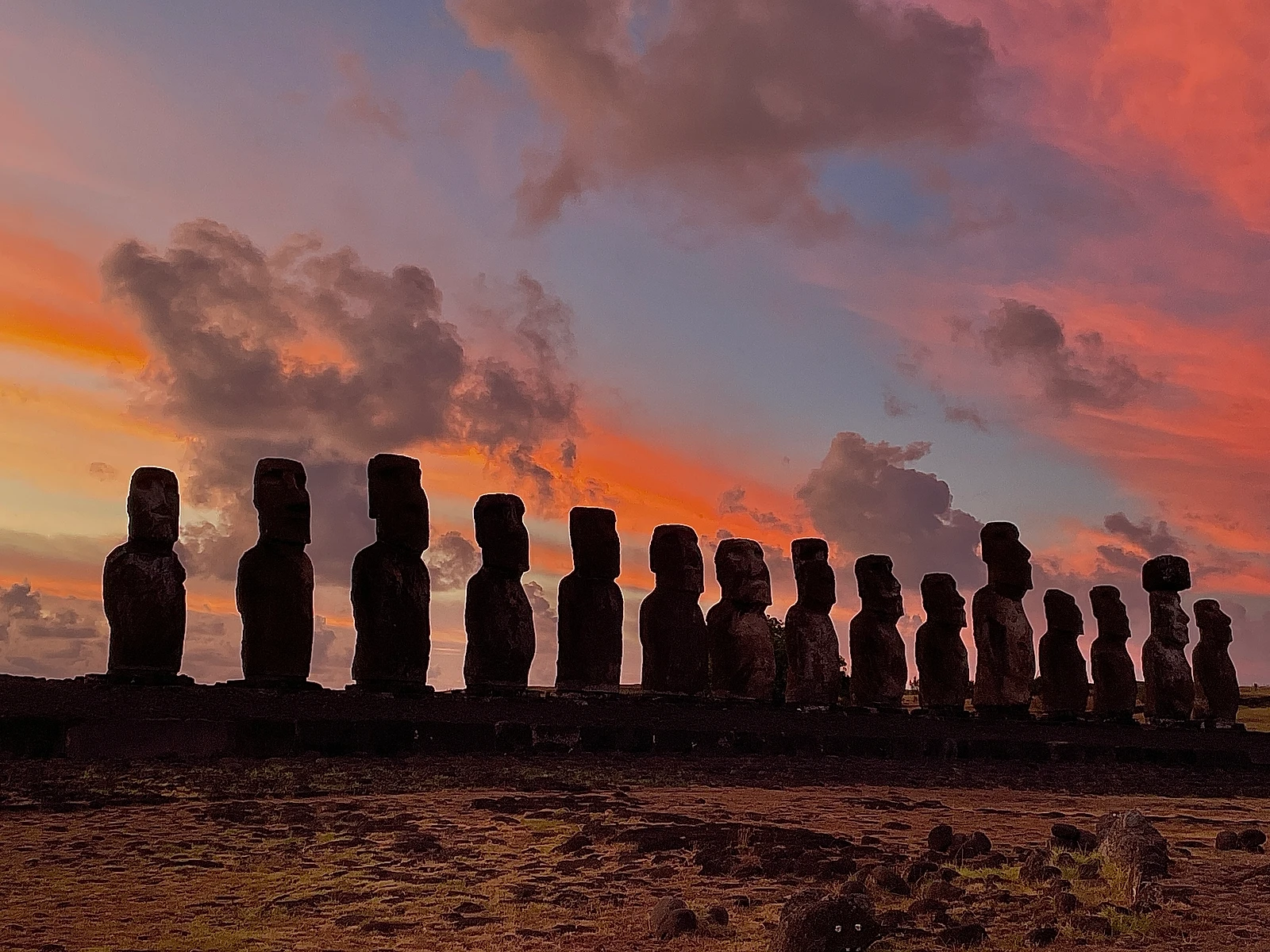
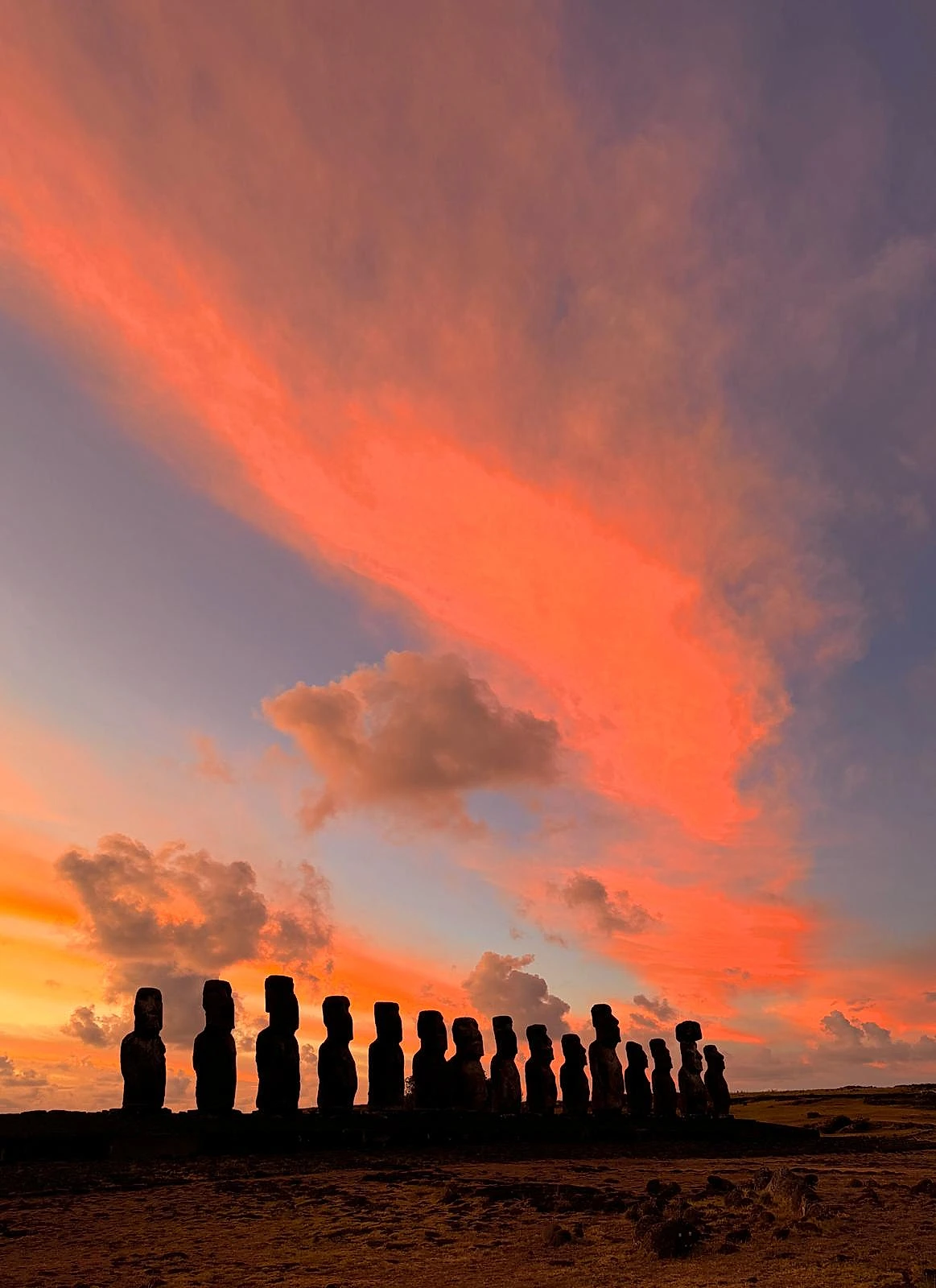
There are places so remote that reaching them feels like an act of faith. Easter Island — Rapa Nui — sits alone in the southeastern Pacific, 3,700 kilometres from the nearest continent, a triangle of volcanic land in an ocean so vast it seems less like geography and more like myth. And yet someone came here, in canoes without instruments, and built something extraordinary. The moai — those great stone ancestors — stand along the coast at Ahu Tongariki in a line of fifteen, facing inward over the island as if watching over the living. Each figure weighs hundreds of tonnes and was carved, transported, and raised by a people whose ingenuity still astonishes. Stand before them as the sun sets and the Pacific turns molten behind you, and feel the full weight of human mystery. The moai do not answer. They simply endure — patient as time itself, their stone faces holding a secret the island keeps to this day.
✦ Watch the sunrise at Ahu Tongariki alone if you can manage it. In that light, with those figures, you will feel the pulse of something ancient and alive.
VOLCANOES, LAKES AND DEEP GREEN SILENCE
The Lake District
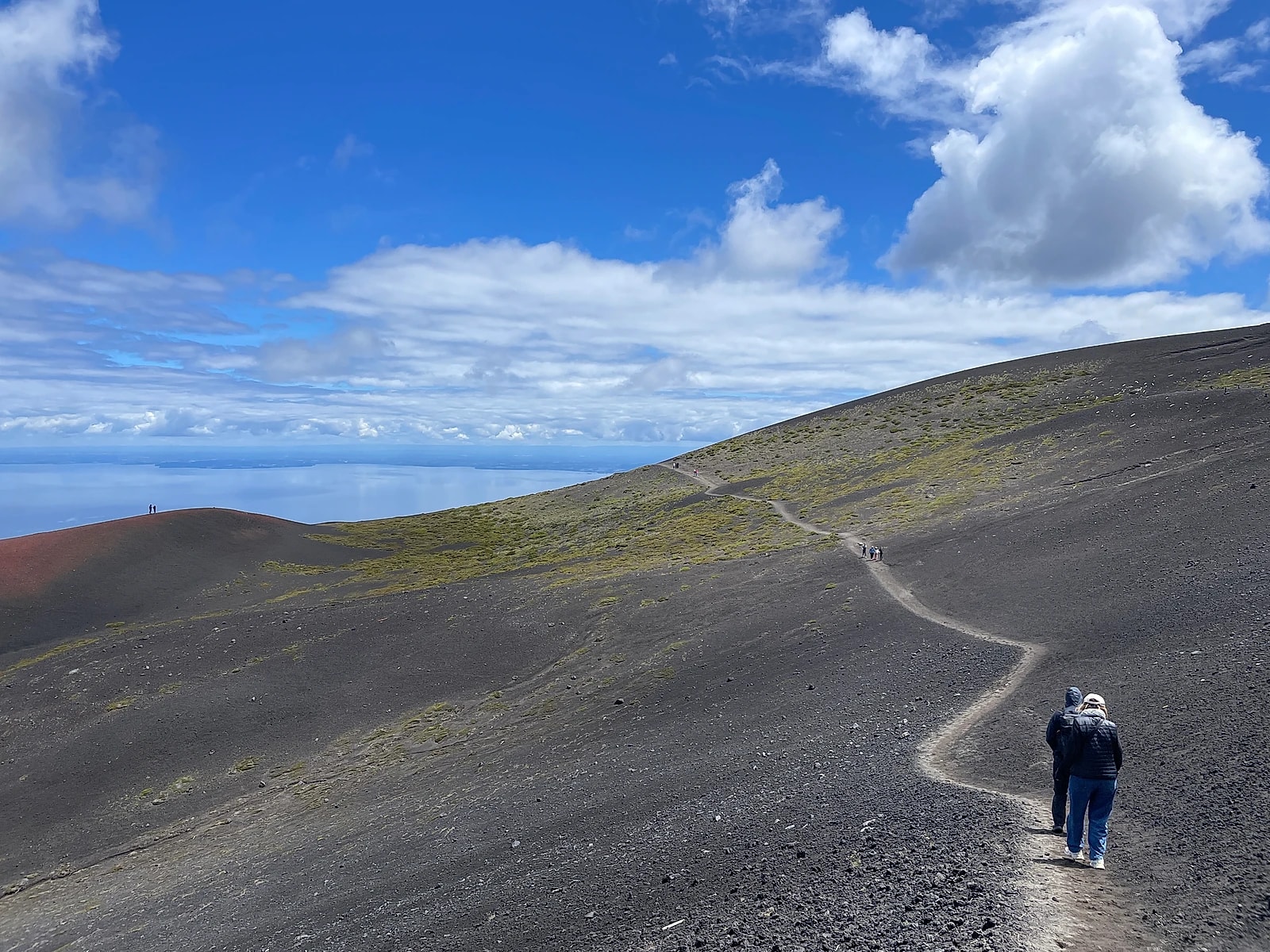
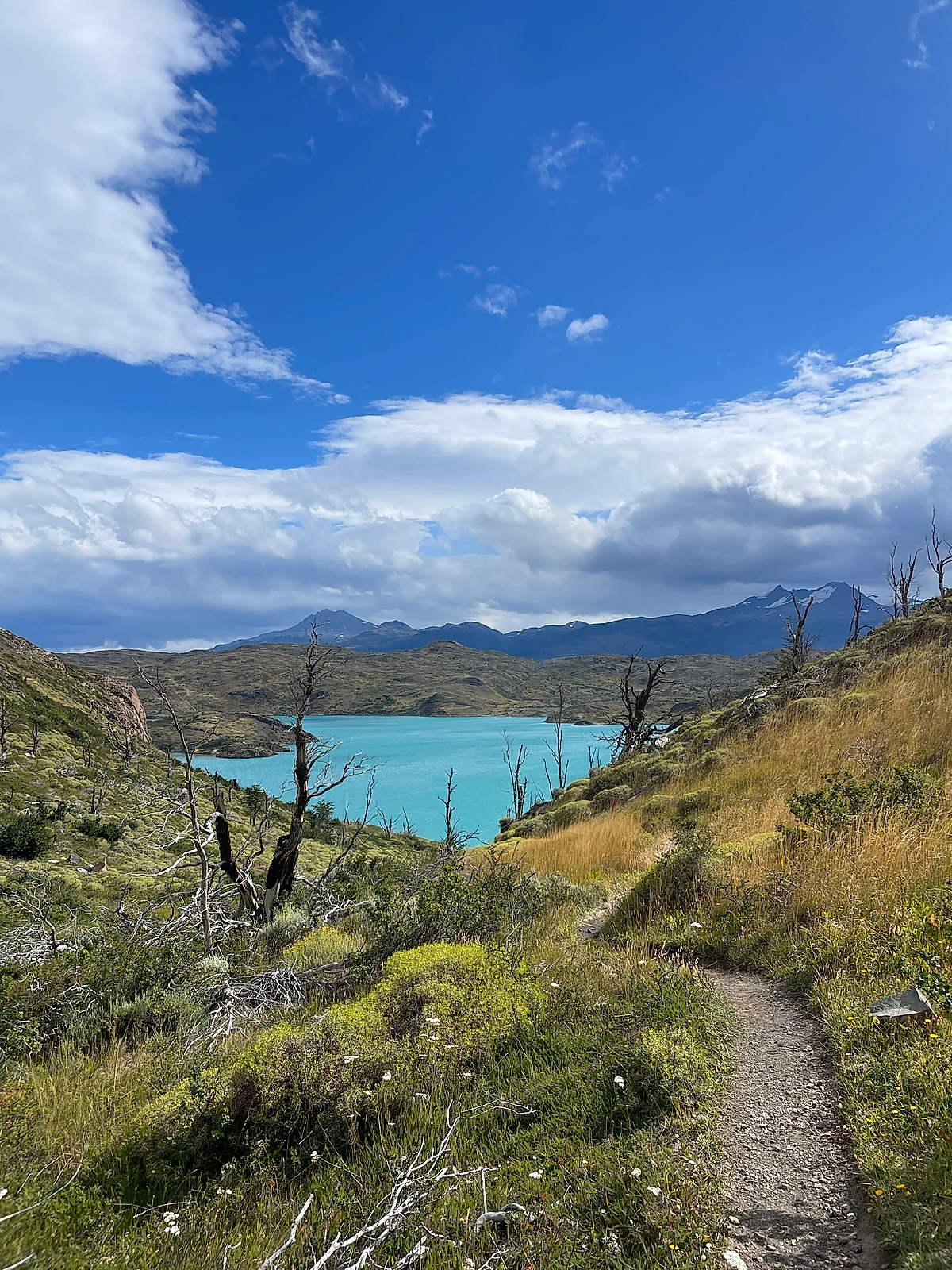
Driving south from Santiago, the land gradually softens into something lush and Germanic and strange — the Lake District of Chile, where snowcapped volcanoes mirror themselves in enormous blue lakes and the air smells of rain and pine and woodsmoke. The towns of Puerto Varas, Pucón, and Villarrica carry the legacy of German settlers who came in the 19th centuryand built chalet-style houses on the shores of lakes so clear you can see the volcanic gravel twenty metres below the surface. Volcano Villarrica — smoking gently at its tip — can be climbed at dawn through snow and frozen wind, and at the summit you peer into an active crater bubbling with orange lava. The descent is by sliding — all caution abandoned — down a mile of glacial snowfield. These are landscapes that strip you of pretension, returning you to something more elemental: a person in boots, breathing hard, in love with the cold.
✦ Kayak across Lago Todos Los Santos on a still morning when the volcano reflects perfectly in the water. Hold the paddle still and let silence be enough.
WHERE THE EARTH SHOWS ITS WILDEST SELF
Patagonia — Torres del Paine
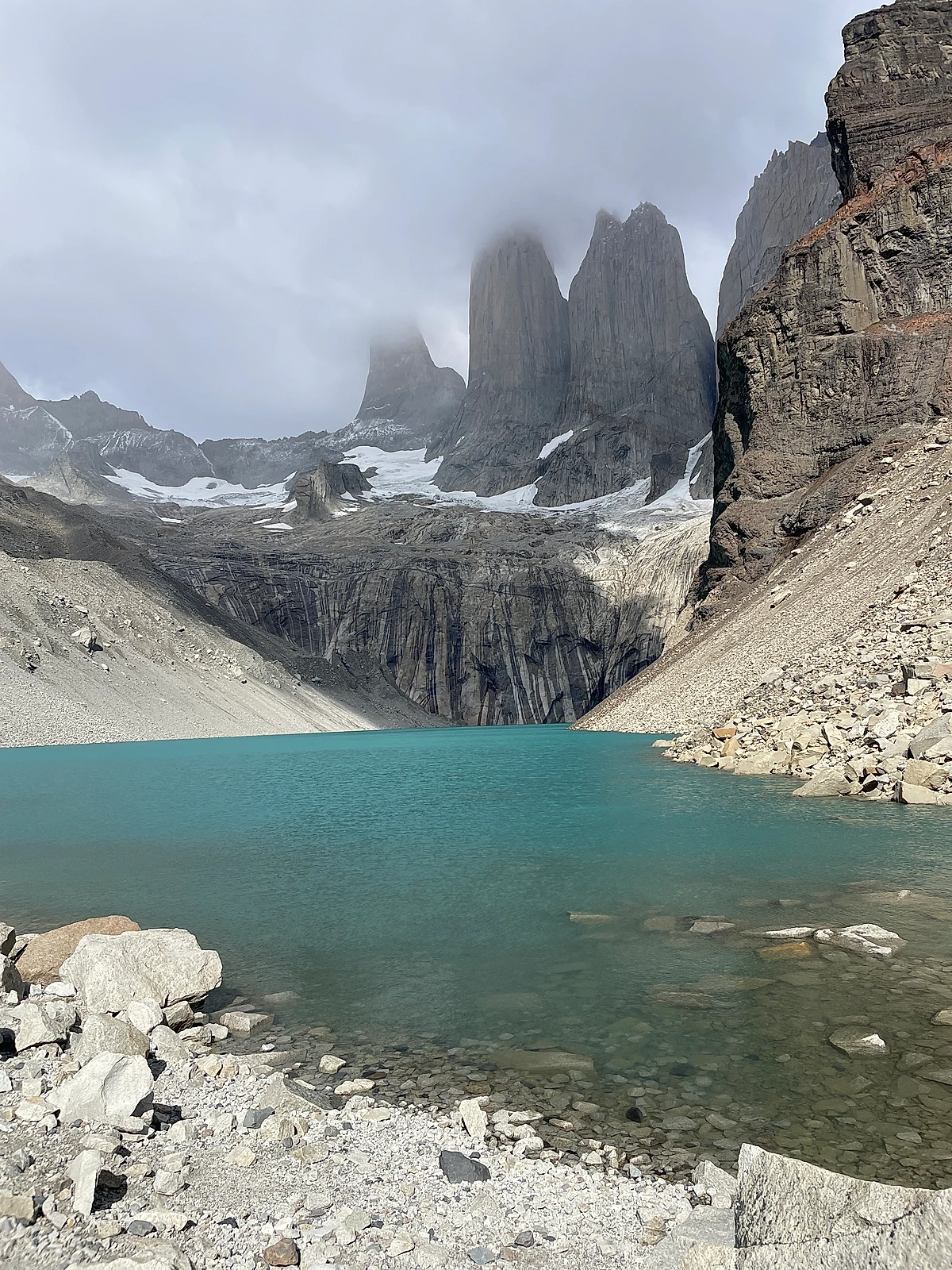
At the bottom of the known world, where the wind arrives with the force of a verdict and the sky changes its mind six times before noon, stand the Torres del Paine. Three granite towers — rose-pink, rust-gold, bone-white — rise some 2,800 metres from the Patagonian steppe in a configuration so improbable, so geometrically perfect, that they seem less like mountains and more like monuments to something without a name. Glaciers pour off the Patagonian Ice Field into turquoise lakes fringed with lenga beech trees flaming red in autumn. Trek the 'W' route over five or seven days and learn what the body is actually capable of when the scenery demands it. Pumas cross the trail at dawn. Condors circle overhead on wingspans that shadow you briefly as you walk. On the final morning, when you climb through darkness to the mirador and the torres emerge from behind cloud as the first light turns their peaks to fire —every blister, every headwind, every sleepless night in a howling tent dissolves into a single clear moment of absolute rightness. You have arrived somewhere you were always meant to come.
✦ Earn the sunrise at the mirador base. What it takes to reach it is exactly the price the view requires, and not a peso more.
CHAPTER THREE
Argentina
A country of fierce passions, vast silences, and wine the colour of desire.
THE WINE CATHEDRAL
Mendoza
Mendoza is an act of alchemy. The sun arrives here with a particular intensity — high altitude, desert dry air, Andean snowmelt in the irrigation channels — and in this crucible the Malbec grape produces something that can only be called transcendence in a glass. The vineyards stretch in long green rows toward the Andes, the mountains so close and so impossibly high that cycling between bodegas you feel them watching you, white-shouldered and quiet. Argentina's great wineries are places of genuine beauty — adobe and stone architecture set among poplar trees and rose gardens, where the wine is poured with pride and conversation and unhurried afternoon light. Eat a long asado under the grapevines, the smoke rising straight up on a windless day, the Malbec breathing in your glass, the Andes turning pink at sunset behind the vines. If happiness has a colour, it is this deep, dark violet-red.
✦ Rent a bicycle and spend a full day riding the wine roads. Stop when something calls you. Let the Andes be your compass.
THE CITY OF TANGO AND MEMORY
Buenos Aires
Buenos Aires is a city that operates at a pitch of feeling most cities cannot sustain. The tango was invented here — not as entertainment but as confession, a dialogue between two bodies that speaks what words cannot. Watch it danced at a milonga in San Telmo at midnight, the bandoneon sobbing its particular sorrow through the smoke, and you will feel something tighten in your chest. This is music and movement as emotional archaeology, digging up what lies beneath the ordinary surface of a life. The city's neighbourhoods are worlds unto themselves. Palermo's jacaranda-lined streets bloom purple in spring, their petals carpeting the sidewalks like a gentle reprimand to hurry less. La Boca's Caminito blazes with colour — cobalt and ochre and crimson — the houses painted in whatever paint the sailors left behind. Recoleta's cemetery is a silent city of elaborate marble mausoleums where the famous and the forgotten lie in ornate, permanent repose. And everywhere, the cafés — Buenos Aires' true cathedrals — where porteños sit over cortado and medialunas for hours, where conversation is elevated to an art form.
✦ Take a tango lesson. Even if you never dance again, your body will remember what it learned about listening to another.
THE THUNDER AT THE WORLD'S EDGE
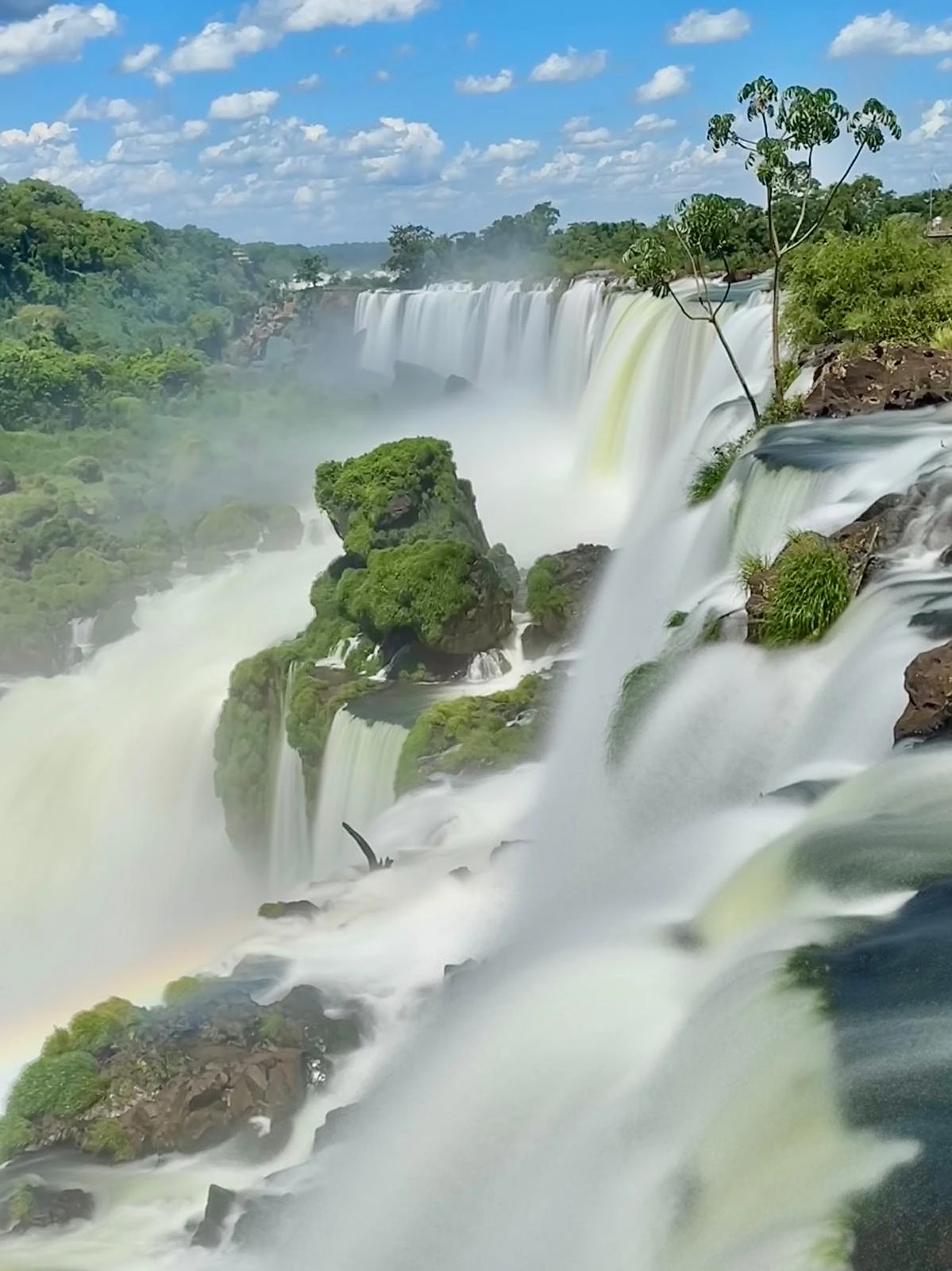
Iguazú Falls
There is no preparation adequate for the first sight of Iguazú. Eleanor Roosevelt, upon first seeing these falls, reportedly turned to her companion and said, 'Poor Niagara.' Nearly 275 individual cataracts, spread across nearly three kilometres of the Iguazú River, plunge up to 82 metres in a roar of white water and tropical mist. The sound arrives before the sight — a deep, earth-born rumble that you feel in your sternum before you understand what you are hearing. Walk to the Garganta del Diablo — the Devil's Throat — and stand at the railing above the main chasm as millions of litres per second thunder into the abyss below. The spray rises in permanent rainbows, and swifts fly through the water curtain, impossibly small against the scale of it all. The jungle surrounds everything — toucans and coatis moving in the undergrowth, the butterflies landing on your arms and shoulders as if you too are a flower. This is nature at its most abundant, most generous, most overwhelming. You leave Iguazú convinced the planet is a miracle.
✦ Visit the Argentine side first for the immersion. Then cross to Brazil for the full panoramic view.
See both. Let neither be enough.
WHERE THE SPANISH COLONIAL WORLD DREAMED MOST BEAUTIFULLY
Salta
Salta calls itself 'La Linda' — the Beautiful — and makes no apologies for the audacity of the claim. The old colonial centre glows in terracotta and cream around a central plaza shaded by enormous trees. The MAAM museum holds the mummified bodies of three Incan children found on the summit of Llullaillaco volcano — offerings to the mountains made 500 years ago and preserved perfectly in the cold and altitude, their small faces wearing an expression of absolute serenity. One leaves the museum changed, having looked into the face of history's most intimate moment. The Tren a las Nubes — the Train to the Clouds — departs Salta at dawn and climbs through dramatic quebradas and salt flats to 4,220 metres on the Puna plateau, crossing a viaduct over a gorge so vast it seems impossible. This is one of the great train journeys on earth, and the landscape it traverses — arid, volcanic, ancient — has the quality of a landscape from before human time.
✦ Eat empanadas in the central market and talk to whoever sits beside you. Salta's warmth is its people as much as its sun.
THE SACRED ROAD OF COLOUR AND STONE
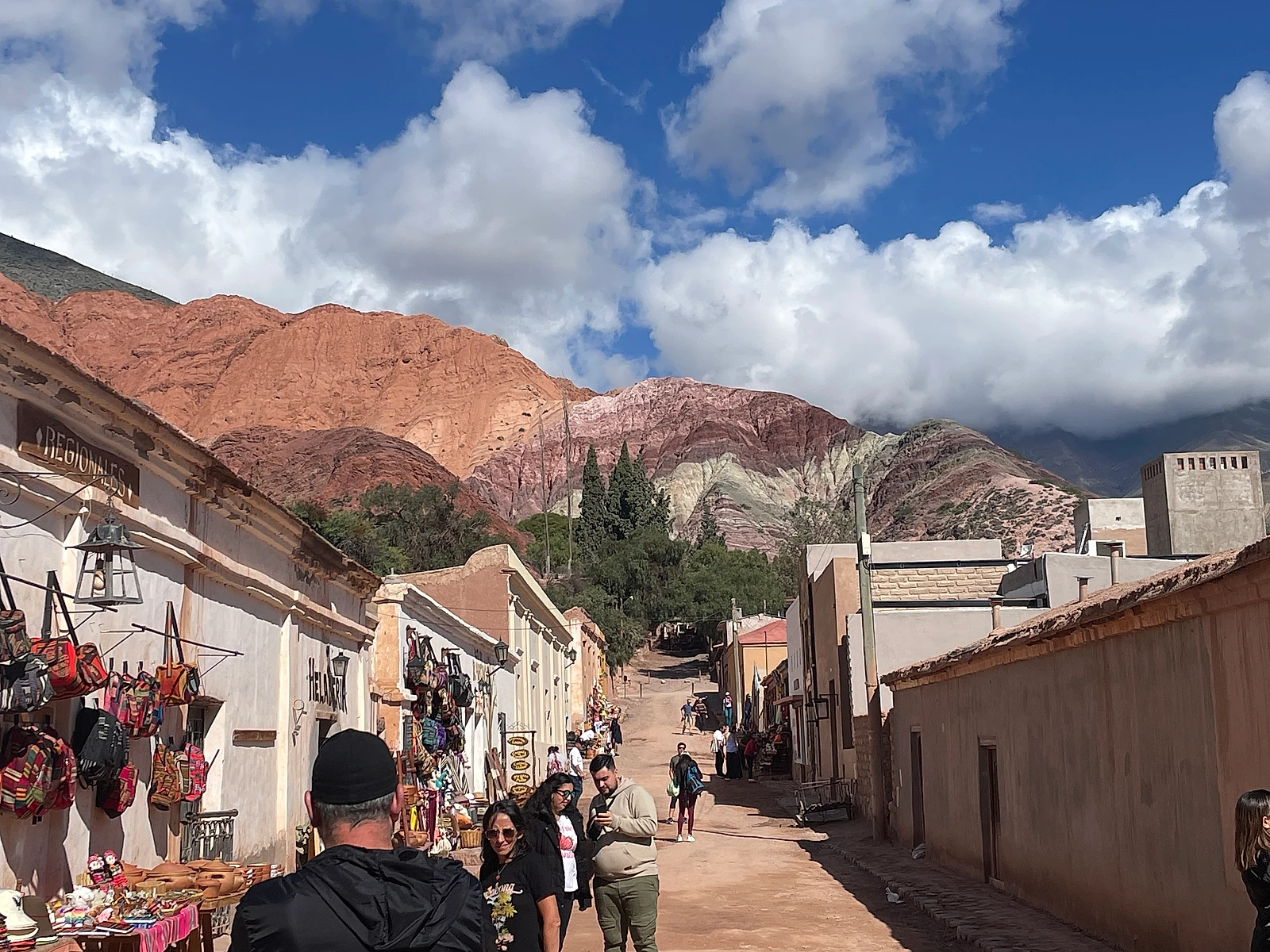
Jujuy — The Mountain Kingdom
North of Salta, Argentina reveals its most otherworldly face. The Quebrada de Humahuaca — a UNESCO World Heritage valley — is a corridor of ancient geology and ancient culture, where the Andes display every colour the earth holds: the Cerro de los Siete Colores at Purmamarca blazes in seven simultaneous shades of terracotta, sage, violet, gold, and rust — a mountain painted by some patient divine hand over millennia of mineral accumulation. Stand before it at dawn when the light rakes across the rock face, and you will understand why indigenous peoples chose this valley as a sacred corridor for thousands of years. The salt flats of the Salinas Grandes lie at 3,400 metres — an enormous white mirror that reflects the sky so perfectly that sky and earth become indistinguishable, and you walk through blue, unmoored and laughing, the horizon dissolved. Tilcara, Humahuaca, Iruya — the villages of Jujuy are places where Andean culture lives undiluted: the music of the quena flute, the weavings of extraordinary colour, the carnaval celebrated with a ferocity and joy that seems to come from the mountains themselves.
✦ Drive the Ruta 9 in full. Stop at every viewpoint. Let the mountains educate you about the meaning of the word 'colour.'
"The Andes do not ask you to be small. They ask you to be honest. There is a difference."
CHAPTER FOUR
Peru
The country where stone speaks, water remembers, and the sky bends down to meet the mountains.
THE RIVER THAT REMEMBERS EVERYTHING
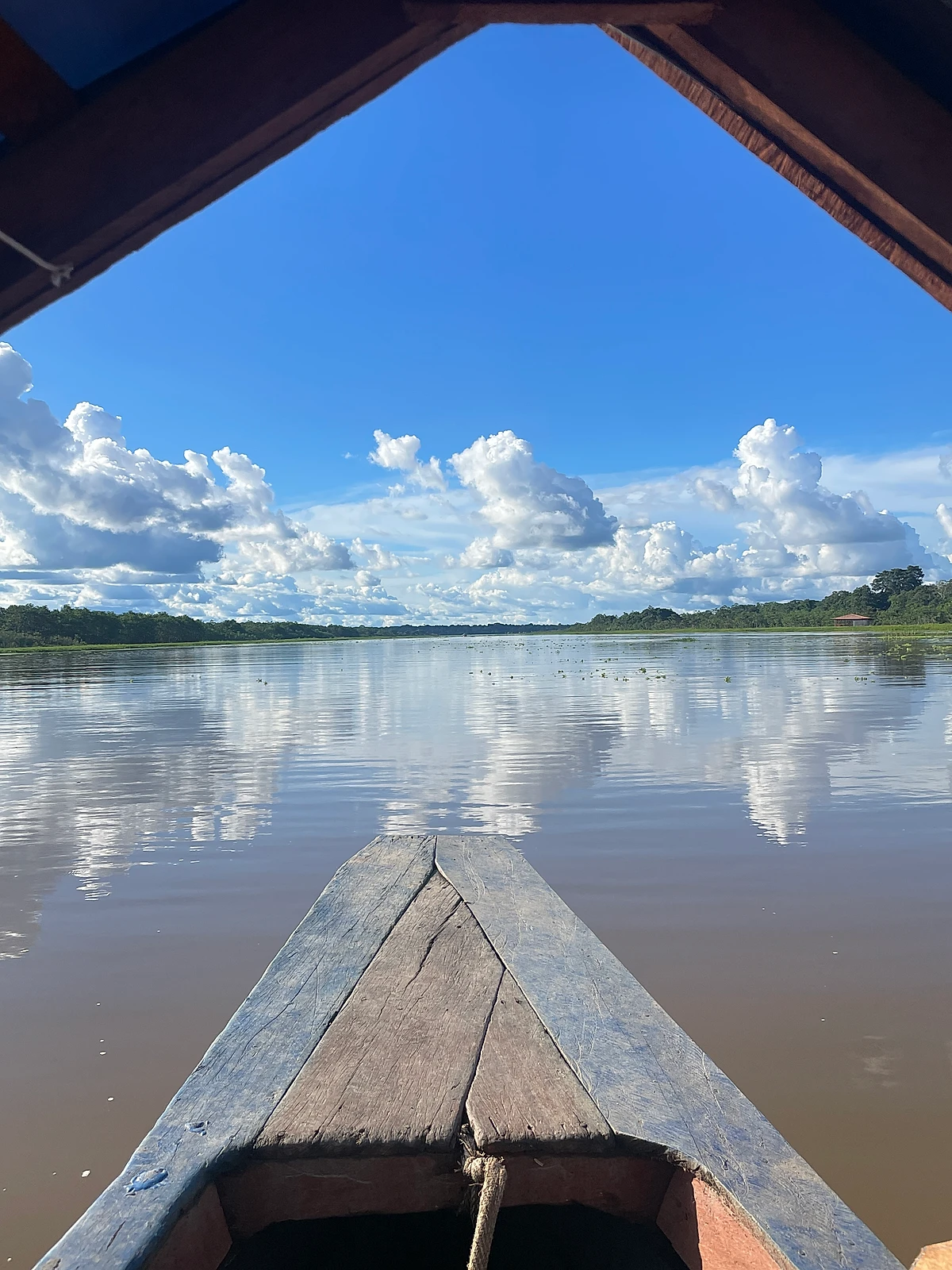
The Amazon River & Pink Dolphins
In the Peruvian Amazon — beginning from the river city of Iquitos, the largest city on earth unreachable by road — the Amazon begins its great eastward dreaming. Here the river is already enormous, wide as a sea in places, its brown waters carrying the dissolved memory of ten thousand tributaries. The jungle on both banks is impenetrable, alive, overwhelming in its fecundity. Enter by slow boat and let the scale of it do its work on your sense of proportion. And then — a fin. A back. A grey-pink curve breaking the surface with impossible grace — the boto, the pink river dolphin of Amazonian legend. These extraordinary creatures — freshwater dolphins of a rosy, burnished hue, their long beaks and small eyes giving them a quality at once prehistoric and otherworldly — surface and dive around the boat as if curious about you. Indigenous people regard them as shape-shifters, as spirits of the river who cross between worlds. Floating here among them in the cathedral silence of the Amazon, with herons lifting from the banks and the jungle breathing its deep humid breath, you understand why. This river is not merely geography. It is the earth's own bloodstream.
✦ Take a night boat on the smaller tributaries with a guide and listen to the darkness. The Amazon never truly sleeps, and neither, somehow, will you.
THE WHITE CITY AT THE FOOT OF VOLCANOES
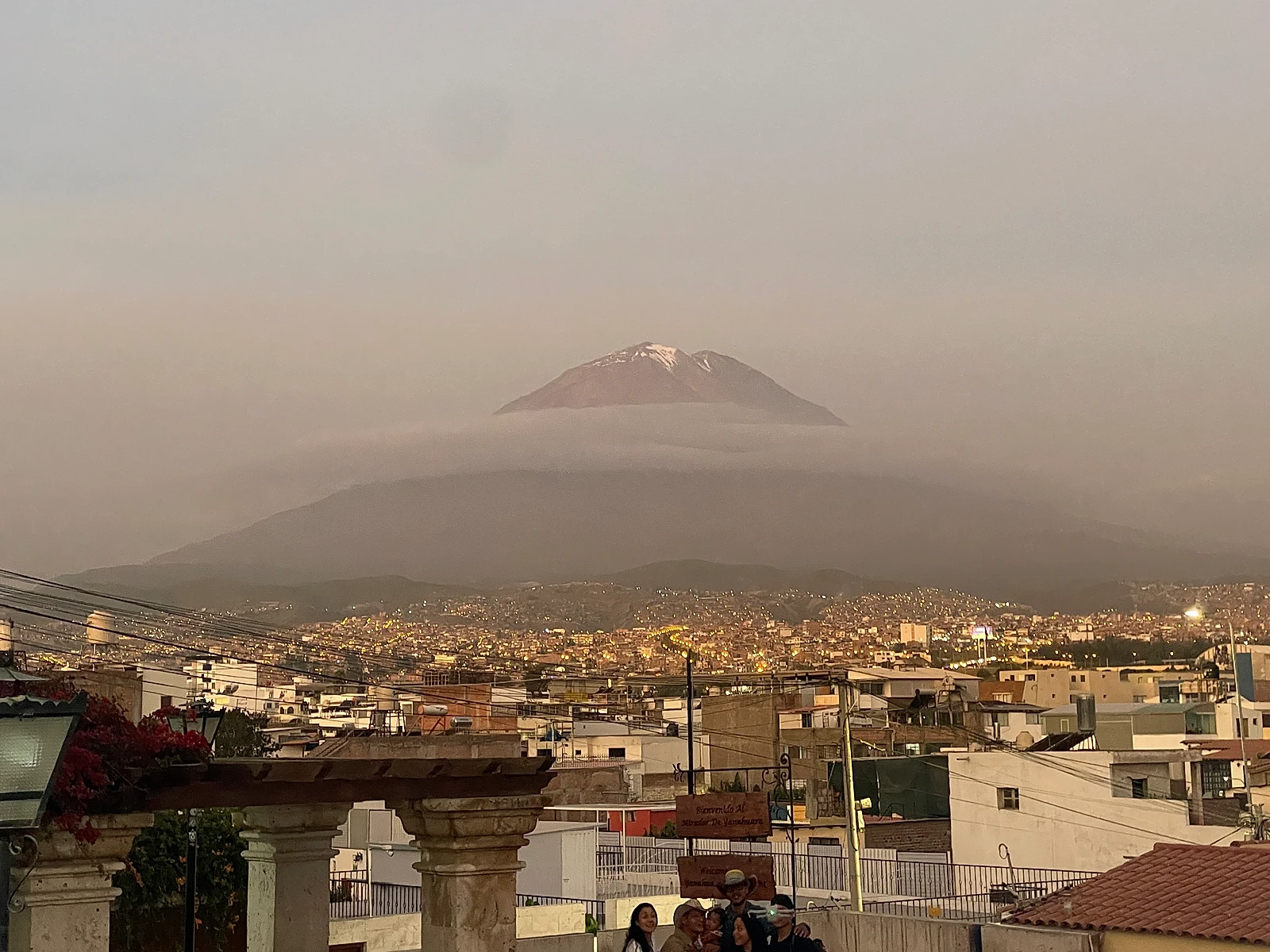
Arequipa
They call it 'La Ciudad Blanca' — the White City — for the sillar, the pale volcanic stone from which its magnificent colonial architecture is carved, and which catches the Andean light and turns it into something luminous and warm. Behind the city rise three volcanoes: El Misti, Chachani, and Pichu Pichu — a holy triad in permanent attendance. The main plaza is one of the finest in all the Americas, and the Convent of Santa Catalina — a walled city within the city, painted in terracotta and cobalt and gold — is so beautiful that entering it feels like stepping into a painting that has agreed to be three-dimensional. Arequipa's cuisine is among Peru's finest — the country that gave the world quinoa, potato in 3,000 varieties, and ceviche. Here in the valley of the Chili River, the flavours are complex and proud: rocoto relleno, cuy, adobo de cerdo. Eat slowly. Drink chicha. Let the volcanoes watch over your lunch. They have been doing it longer than the city has existed.
✦ Climb to the convent's rooftop at sunset when El Misti turns pink and the city glows silver. It costs nothing but the moment itself.
THE VALLEY THE INCA LOVED MOST
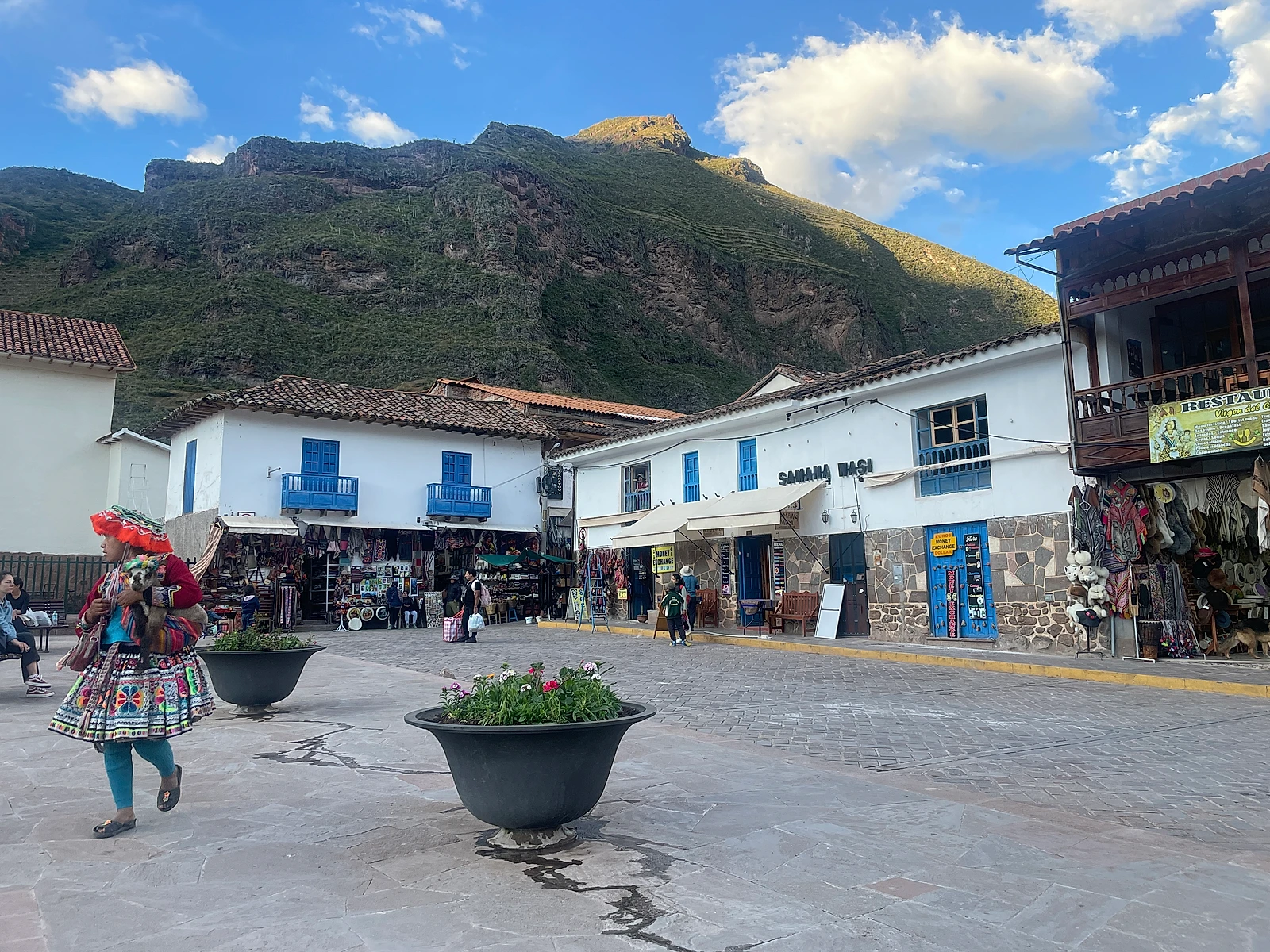
The Sacred Valley — Urubamba, Pisac & Chinchero
The Urubamba River moves through the Sacred Valley with the unhurried confidence of something that knows it is going somewhere important. The valley floor — fertile, green, lying between mountains on all sides — was the Inca Empire's agricultural heart and spiritual core, a place where the terrestrial and the celestial were understood to be continuous. Snowy peaks shimmer at the valley's edges, and in the terraced fields, farmers still grow the ancient varieties of maize and potato in the same plots their ancestors cultivated five centuries before. Pisac's market, held in the colonnaded plaza of this small Andean town, is the most beautiful market in the Americas — not for its size but for its authenticity. Women in multilayered skirts of brilliant colour arrange piles of weaving, ceramic, and produce with the ease of long practice. Above the town, the Inca ruins climb the hillside in stone terraces that seem to follow the logic of the mountain itself. Higher still, at Chinchero — a weaving village above the valley — indigenous women demonstrate the art of natural dyeing, their hands stained indigo and cochineal red, the textiles they produce a visual language of symbol and story that has not been interrupted in a thousand years.
✦ Spend a night in the Sacred Valley itself rather than Cusco. The stars at 2,800 metres, away from city light, are the original ceiling the Inca read like a book.
THE GATEWAY VILLAGE
Aguas Calientes
Aguas Calientes — also called Machu Picchu Pueblo — exists for one purpose and fulfills it with cheerful devotion. Wedged between vertical jungle walls at the base of the cloud forest, with the Urubamba river roaring through its centre, it is the last town before the ascent. The hot springs for which it is named offer a quiet ritual — soaking your tired legs in thermal water as clouds trail through the mountains above — before the final journey upward. The town's energy is that of something held in anticipation, a held breath. Everyone here is waiting to go up. Everyone here knows something extraordinary awaits.
✦ Take the 5:30am bus to be among the first through the gates. The citadel in the morning mist, before the crowds, is Machu Picchu as it was always meant to be seen.
THE CITY IN THE CLOUDS — THE JOURNEY'S END
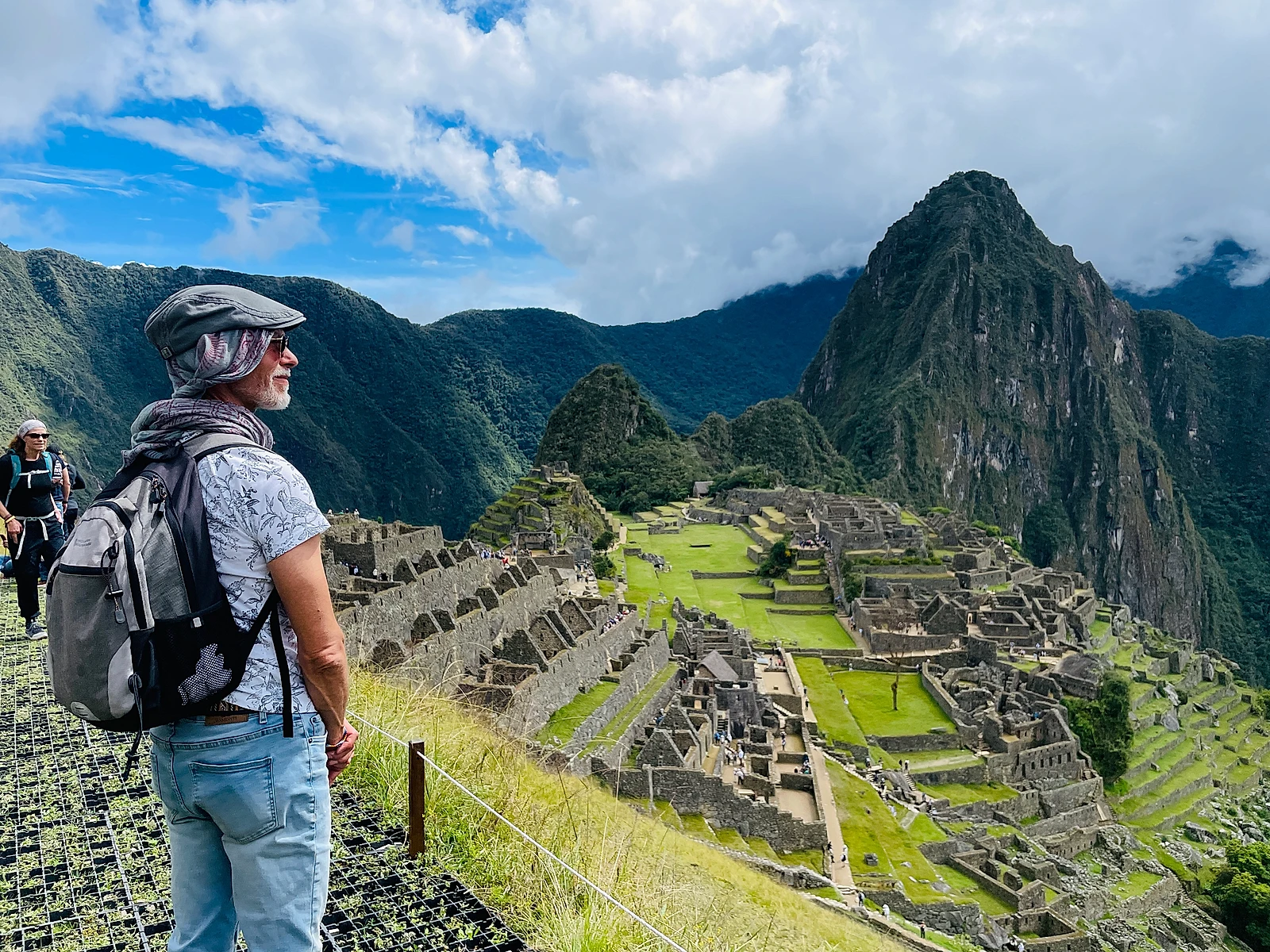
Machu Picchu
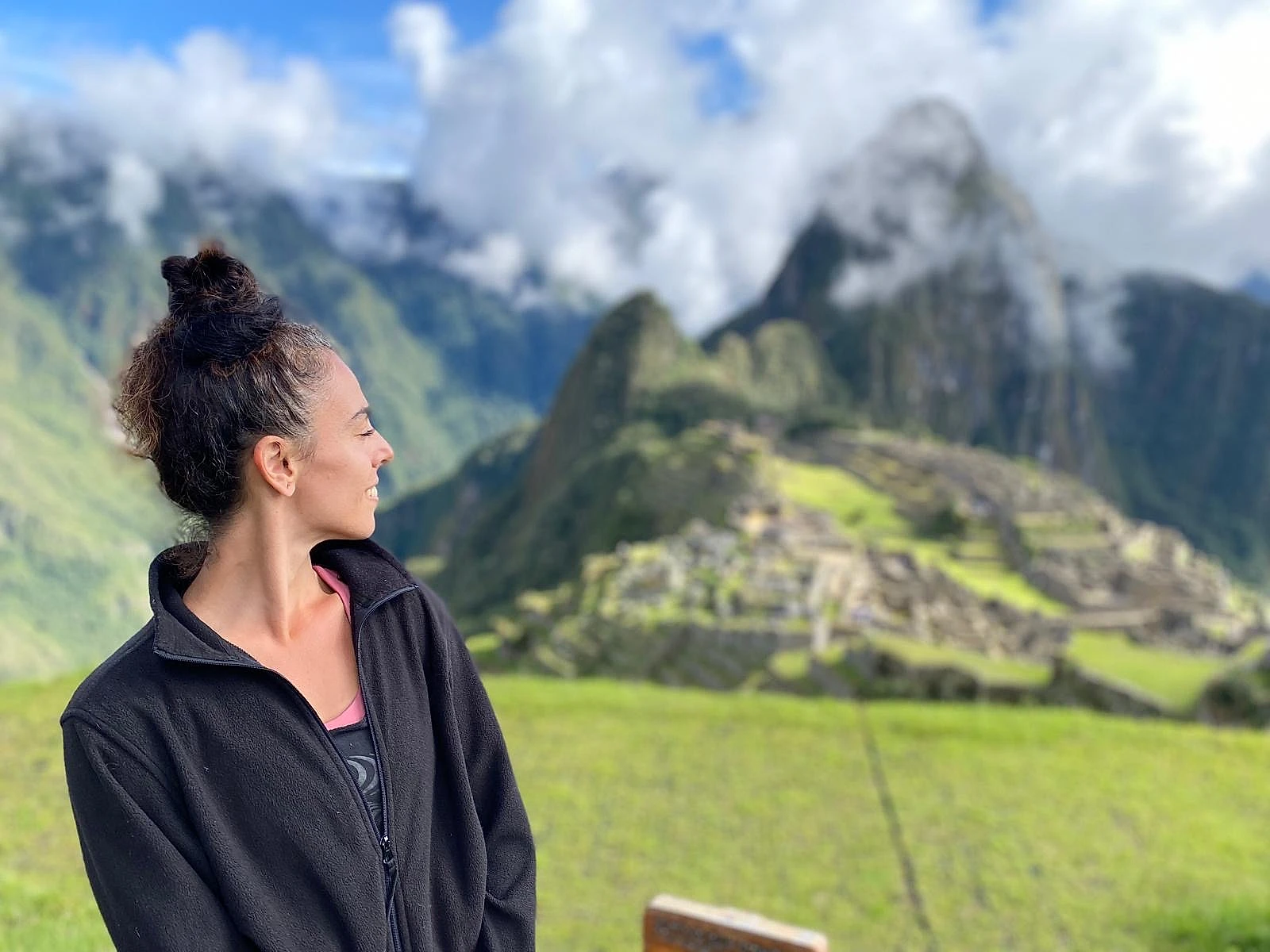
You cannot prepare for Machu Picchu. You can read about it, see photographs, watch films, and none of it touches the reality of arriving at the Sun Gate and looking down for the first time at the city laid out below, wreathed in morning cloud, its stone terraces and temples and towers emerging and dissolving in the mist as if the city itself is deciding whether to be seen. It is one of those rare moments that splits time: before, and after. The Inca built this city — at 2,430 metres above sea level, in the saddle between two peaks, surrounded by cloud forest and the thunder of the Urubamba 600 metres below — with a precision and a beauty that surpasses all easy explanation. The stones fit together without mortar, each one shaped so exactly that a blade of grass cannot pass between them. The Intihuatana — the 'Hitching Post of the Sun' — was an astronomical instrument so precise that the Inca used it to track the solstices, to mark the turning of the year, to anchor time itself to the earth. The Temple of the Sun is aligned so that on the winter solstice, the first rays of sunrise enter a window and illuminate a specific stone. Five hundred years later, they still do. Climb Huayna Picchu, the peak that rises behind the citadel, and look down at the city from above — the full geometry revealed, the Inca's mastery of landscape and astronomy and architecture laid out beneath you like a great stone sentence written in a language older than words. And then sit. Simply sit. Let the cloud move through. Let the condors, if they come, circle above. Let the mountains hold the silence that exists in that altitude and that history. You have arrived at the end of the journey and the beginning of something else entirely — a return to your ordinary life carrying the extraordinary weight of having seen what human devotion, human intelligence, and human love of beauty can build.
✦ Before you leave, find a quiet corner of the citadel away from the paths. Sit with your back to a stone wall that has stood 600 years. Place your hands on the rock. Close your eyes. Listen. You will hear something that has no name in any language — and you will carry it with you for the rest of your life.
The Journey Does Not End at the Airport
✦
South America is not a place you visit and then leave. It follows you home in the smell of eucalyptus on your jacket, in the way you now pause before a mountain, in the unexpected sting of tears when you hear a charango played in a shopping mall at Christmas. It has rearranged something fundamental inside you — the angle at which you receive beauty, the depth to which you allow wonder. The condor still circles. The pink dolphins still turn their slow, luminous spirals in the brown river. The moai still face inward over their islands. And somewhere in the Andes — in the stone, in the wind, in the thin silver air above the Sacred Valley — something waits for you to return.
ECUADOR · CHILE · ARGENTINA · PERU