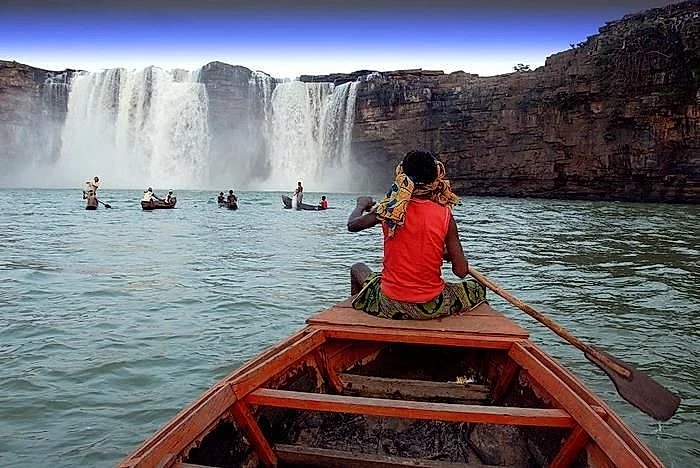
Chitrakote doesn’t overwhelm you immediately—it builds up slowly. You hear it before you see it. A distant, steady roar that grows louder as you approach, until suddenly the landscape opens up and the falls reveal themselves in full width.
It’s not just the height or the force of the water that makes Chitrakote special—it’s the scale. The way the waterfall stretches across the horizon, wide and continuous, almost like a curtain of motion.
And yet, despite its power, there’s a calm to it. Sit long enough, and the sound becomes rhythmic, almost meditative. The mist rises and falls, catching light in soft fragments, sometimes forming faint rainbows that appear and disappear without announcement.
The experience here isn’t about activity—it’s about observation. You walk along viewpoints, pause at different angles, and eventually find a spot where you just sit and watch.
During monsoon, the falls are at their most powerful—loud, wide, and dramatic. In winter, they soften slightly, becoming more accessible and easier to explore from closer distances.
From a travel standpoint, Chitrakote is relatively straightforward to reach from Jagdalpur. Accommodation options are simple but sufficient, and staying overnight allows you to experience both sunrise and sunset—two completely different moods of the same place.
Sunset is particularly special. The light drops slowly behind the falls, and the entire scene shifts—from bright and powerful to soft and reflective.
Chitrakote reminds you that power and peace can exist in the same space.
Best Time to Visit: July to February
How to Reach: Near Jagdalpur
Travel Tip: Visit during sunset for the best experience