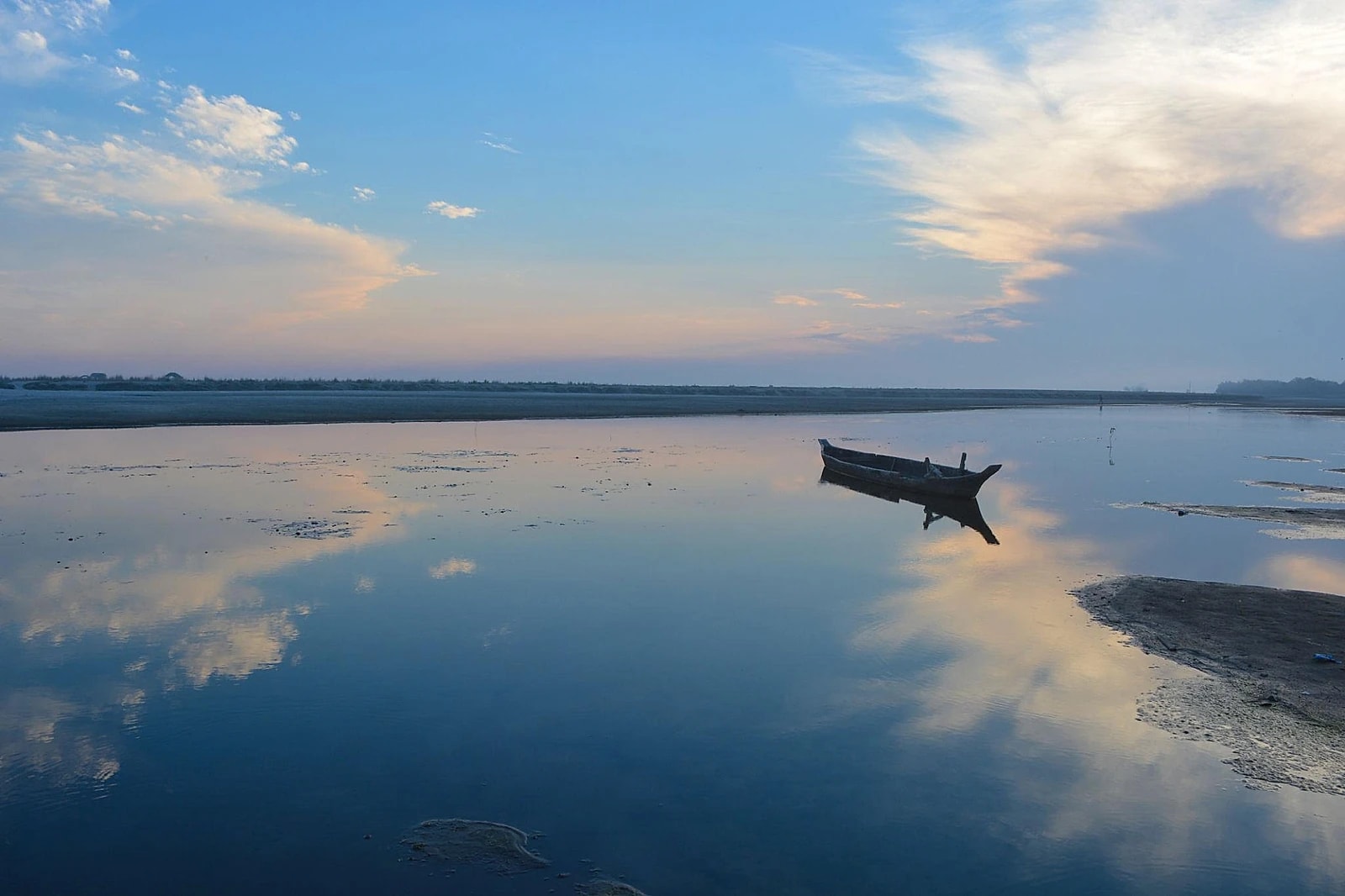
Majuli doesn’t feel like land—it feels like something gently floating between moments. Surrounded by the Brahmaputra, the island carries a quiet that isn’t empty, but deeply alive. The river moves slowly around it, like it’s protecting something fragile, something worth preserving.
The first thing you notice is space. Open skies, wide riverbanks, long stretches of land where nothing feels crowded. The air feels lighter here, not because it’s different, but because nothing is competing for your attention.
Life in Majuli moves at its own pace. You see it in the monasteries, where chants echo softly through open halls, and in the villages, where daily routines unfold without urgency. There’s a sense of continuity here—as if things have been happening the same way for generations, and no one feels the need to change it.
You don’t rush through Majuli. You move with it. Renting a bicycle is one of the best ways to explore—slow enough to notice details, fast enough to cover distance. Roads cut through fields and small settlements, often leading to satras (Vaishnavite monasteries) that are both spiritual centers and cultural archives.
Sunsets here feel longer. The sky stretches wider, the light softens gradually, and the river reflects everything like it’s holding onto the day for just a little longer. You sit, you watch, and for once, you don’t feel like checking your phone.
From a practical standpoint, Majuli requires a bit of planning, especially with ferry timings from Jorhat. But that effort is what keeps it from becoming crowded. Stay in local homestays, eat simple food, and let the place unfold naturally.
Majuli isn’t about doing more. It’s about noticing more.
Best Time to Visit: October to March
How to Reach: Ferry from Jorhat
Travel Tip: Plan ferry schedules in advance and stay overnight