
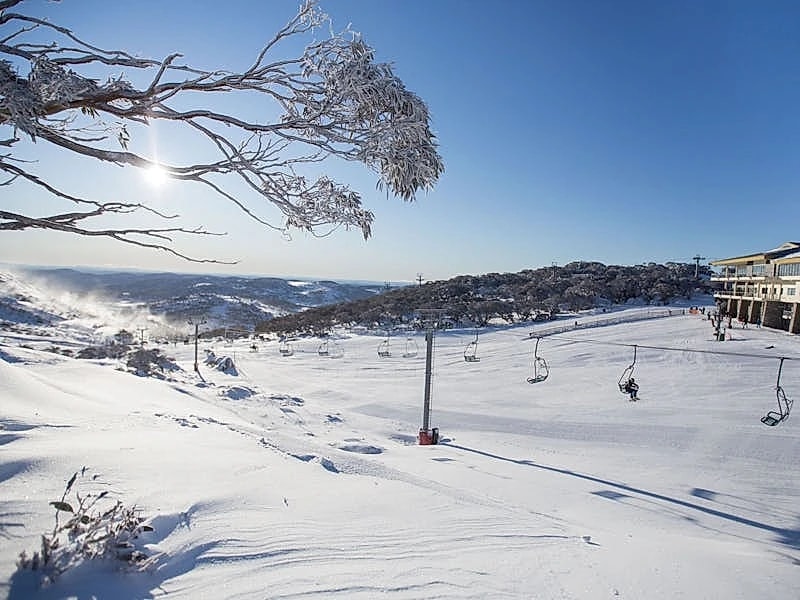
Perisher Valley & Kosciuszko National Park
A local-minded travel guide to Australia’s alpine heart
I can’t promise these are secrets unknown to every single local, but this guide is built to feel less like a generic brochure and more like the way repeat visitors actually plan Perisher well.
Perisher is the anchor of the Snowy Mountains snow scene: four interconnected resort areas, more than 3,000 acres of skiable terrain, over 100 groomed trails, 45 lifts, and a 2026 season running from 6 June to 5 October. It sits within the Thredbo-Perisher area of Kosciuszko National Park, the gateway to Australia’s highest country and some of the country’s most memorable alpine walking. (Perisher)
A thoughtful trip here starts with Country. Perisher acknowledges the Monero-Ngarigo People, while the wider park sits on Country that includes the Wiradjuri, Wolgalu, Ngunnawal and Monaro Ngarigo peoples. Kosciuszko is not just a snow playground; it is a cultural landscape and traditional gathering place with more than 1,000 recorded Aboriginal sites. (Perisher)
When to go
For maximum terrain and classic snow energy, aim for July to August. Perisher says all four resort areas are usually open by early to mid-July, depending on snow coverage and conditions, but this is also peak season, especially through NSW school holidays and August weekends. (Perisher)
For the smartest overall trip, especially for first-timers, families, or anyone who prefers a smoother pace, September to early October is the underrated sweet spot. Perisher specifically recommends spring for milder temperatures, softer snow, fewer crowds, longer days and a more laid-back holiday feel. (Perisher)
Where to base yourself
The practical local split is simple: stay in Jindabyne for value, dining and flexibility; stay on-snow in Perisher Valleyfor maximum convenience. Jindabyne is widely used as the alpine launch pad, with cafes, bars, restaurants and the lakefront, while Perisher’s own accommodation options span Perisher Valley, Guthega, Smiggin Holes and Jindabyne. For a premium ski-in, ski-out stay, Perisher Valley Hotel is one of the most convenient on-mountain options, close to Village Eight Express. (Snowy Mountains Magazine)
My practical recommendation: book Jindabyne for a first visit or a longer stay, then go on-snow only if first-chair convenience matters more than evening choice and budget. That matches how many repeat visitors use the region: mountain by day, Jindabyne by night. (Snowy Mountains Magazine)
The smartest way into Perisher
The most local-minded move on a busy winter day is Bullocks Flat + Skitube. Perisher describes Skitube as the quickest and most reliable winter access, with a roughly 10-minute trip to Perisher Valley, free day and overnight parking at Bullocks Flat, and easy continuation to Blue Cow. On peak days, Perisher explicitly recommends considering Skitube to avoid some of the stress of alpine driving, traffic and parking. (Perisher)
If you drive into Kosciuszko National Park, winter peak vehicle entry is currently $29 per day, and all 2WD vehicles must carry snow chains between the June and October long weekends on key alpine roads including Kosciuszko Road and Island Bend/Guthega Road. Also note that private vehicle access between Perisher and Charlotte Pass is closed in winter. (NSW National Parks)
How locals tend to ski Perisher
The first local habit is to avoid getting stuck in Front Valley all day. Perisher’s own peak-day guidance is to spread out across the four resort areas, with specific nudges toward Blue Cow, Guthega and Smiggin Holes instead of congregating only at Front Valley. (Perisher)
For first-timers and early beginners, Smiggin Holes is the strongest play. Perisher calls it the designated beginner area, and an earlier resort guide notes that its bowl layout helps groups finish in the same place while also being more protected from weather. (Perisher)
For intermediates, Blue Cow is the standout. Perisher says it is loved by locals for its Main Range views and diverse terrain, and on peak days it even recommends starting there for both scenery and crowd avoidance. (Perisher)
For quiet confidence laps and old-school charm, Guthega is the insider-feeling choice. Perisher describes it as a place locals love and often stay all day, and its own guide highlights the area’s mix of beauty, varied trails and tucked-away character. (Perisher)
For strong skiers and riders, Mt Perisher has become even more compelling with the Mt Perisher 6 chair. It now reaches Australia’s highest lifted point at 2,042 metres and gets riders to the top 44% faster, improving access to some of Perisher’s best intermediate and advanced terrain. (Perisher)
A ski adventure that actually feels like Perisher
Here is the version of Perisher I would recommend for a compelling winter trip.
Start one morning at Smiggin Holes if you are learning or shaking off rust. It is the best place to build rhythm without getting overwhelmed. Once your legs are underneath you, graduate toward Perisher Valley and then use the resort’s interlinked terrain to roam rather than repeat the same lift. (Perisher)
Dedicate another day to Blue Cow and Guthega. This is where Perisher feels less like a single ski hill and more like a real alpine network. Blue Cow gives you scale, views and terrain variety; Guthega gives you atmosphere, quieter laps and that “locals stayed here all day for a reason” feeling. (Perisher)
Use a third day for the big-mountain side of Perisher: Mt Perisher, high-speed laps and a proper lunch stop rather than racing through the day. That is the day to lean into the resort’s size and the upgraded access of Mt Perisher 6. (Perisher)
Beyond downhill skiing
Perisher is not only about lift-served skiing. The resort has over 100km of marked Nordic trails, which makes cross-country skiing and snowshoeing one of the most underused ways to experience the Snowy Mountains. If you want the landscape to feel quieter, wilder and more cinematic, this is one of the best local-style choices. (Perisher)
For a memorable winter add-on, Perisher runs Night Skiing & Boarding on select Tuesdays and Saturdays on Front Valley, generally from 6pm and depending on conditions. It is one of the most atmospheric ways to finish a ski day. (Perisher)
For families or mixed-ability groups, Perisher also has a dedicated snow play and toboggan area, but toboggans are not allowed on ski slopes outside that designated zone. (Perisher)
Kosciuszko National Park: the essential non-negotiable
If you only ski and leave, you miss half the reason this area is special. In warmer months, the park turns into a high-alpine walking destination. The Kosciuszko walk from Thredbo is a 13km return Grade 3 day walk taking roughly 4 to 5 hours, crossing the headwaters of the Snowy River and rising to the 2,228m summit of Mount Kosciuszko. (NSW National Parks)
The Charlotte Pass route is longer and more expansive: 18.6km return, 6 to 8 hours, and a more immersive high-country day. In winter it is snowbound, and while you can cross-country ski or snowshoe it, there are no snow poles marking the route; private vehicle access to Charlotte Pass is also closed in winter. (NSW National Parks)
The deeper local-feeling option in the green season is to skip the obvious summit race for a day and do Porcupine Rocks from Perisher Valley. It is a 5.7km return walk from the reservoir, and the granite outcrops give wide views across the Main Range, Thredbo Valley and Bullocks Flat. It is exactly the kind of side-trip repeat visitors remember.
For a longer alpine immersion, the Snowies Alpine Walk links Guthega, Charlotte Pass, Perisher Valley and Bullocks Flat, with the full route running 56km through the rooftop country of the Snowies. Even if you do not commit to the full walk, smaller sections such as Guthega to Charlotte Pass give you the best of the park in digestible form. (NSW National Parks)
The local touches that elevate the trip
A polished Snowy Mountains trip should include at least one Jindabyne evening and one Thredbo Valley stop. Jindabyne is the region’s natural social base, while the surrounding Snowies food scene is known for local produce, alpine dining and regional drinks. Wildbrumby is a standout local stop, known for schnapps made from locally sourced fruit and its sculpture garden setting. (Snowy Mountains Magazine)
Another smart move is to stop at the Snowy Region Visitor Centre in Jindabyne before heading up. NSW National Parks identifies it as a place for maps, brochures, park information and entry passes, which is especially useful if your trip blends skiing with park walks. (NSW National Parks)
A polished 3-day version of the trip
Day 1: Arrive via Jindabyne, stop at the Snowy Region Visitor Centre, check road and park conditions, then settle into town or on-snow accommodation. Keep the evening easy. (NSW National Parks)
Day 2: Use Bullocks Flat + Skitube, start strong at Blue Cow, then explore Guthega in the afternoon. This is the best day for scenery and for seeing how broad Perisher really is. (Perisher)
Day 3: Choose your version of adventure: Mt Perisher 6 for high-energy laps, Nordic trails for a quieter mountain day, or in non-winter months a park walk such as Porcupine Rocks or Mount Kosciuszko. (Perisher)
Final advice
Perisher rewards people who treat it as a mountain network, not a single base area. The most satisfying trips spread their time across Smiggin Holes, Blue Cow, Guthega and Mt Perisher, then balance lift days with one true Kosciuszko experience. Check the snow report, lift report, trail grooming, road conditions and park alerts before each day, because alpine weather in this region changes quickly and can be severe at any time of year. (Perisher)