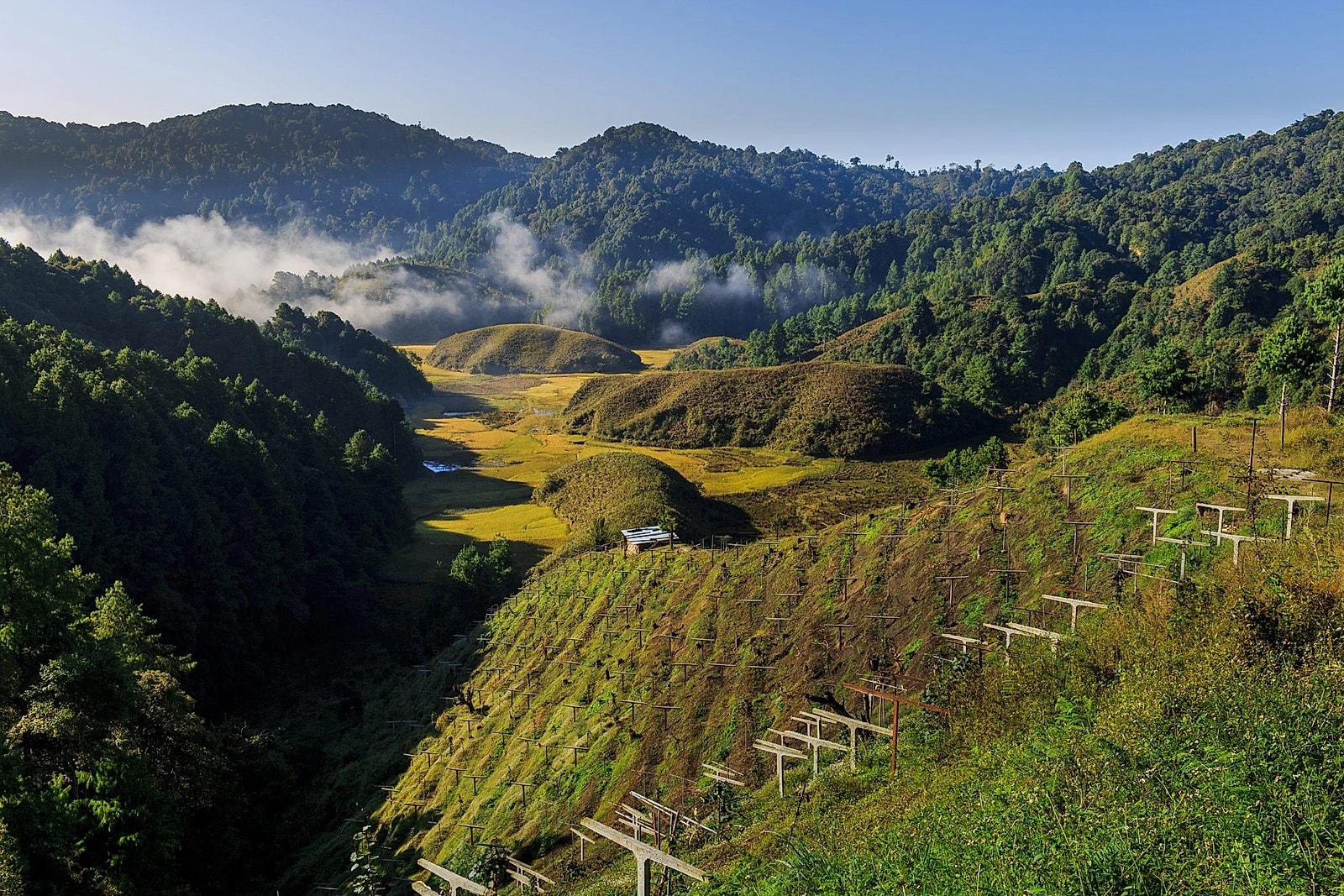
Ziro Valley doesn’t announce itself. It unfolds. Quietly, steadily, like a place that has no interest in impressing you—and yet somehow does. Surrounded by pine forests and layered rice fields that shift colors with the seasons, Ziro feels like it exists outside the urgency of the rest of the world.
The first thing you notice here is the rhythm. It’s slower, but not lazy. Intentional. People move with purpose, but without rush. The wind carries a softness, passing through fields and trees without disturbance. Even the sky feels wider here, like it has more space to stretch.
You don’t explore Ziro by chasing locations. You explore it by slowing down enough to notice it. Walking becomes your primary way of experiencing the valley. Roads are narrow, often empty, cutting through fields where life happens in small, consistent ways—farming, cooking, conversations that don’t feel hurried.
The Apatani community adds depth to the landscape. Their way of life is closely tied to the land, and you see it in everything—from the structure of their homes to the way fields are cultivated. There’s a quiet harmony between people and environment that feels rare and grounding.
Mornings in Ziro are gentle. Mist lifts slowly, revealing the valley in layers. This is the best time to step out—walk through the fields, sit by the edges, or just observe daily life beginning around you. There’s no spectacle, no dramatic moment—just a steady unfolding of the day.
From a travel perspective, Ziro rewards those who don’t rush. Stay in a homestay, eat local food, and spend more time doing less. That’s where the real experience lies.
Reaching Ziro requires some effort, but that’s part of what keeps it preserved. It’s not designed for mass tourism—and that’s exactly why it works.
Best Time to Visit: March to October
How to Reach: Fly to Itanagar, then drive to Ziro
Travel Tip: Choose homestays over hotels for a richer experience